Interlocking Stone Cleaning in Toronto: Polymeric Sand, Pressure Specs and When to Reseal
Interlock cleaning in Toronto: safe pressure and nozzle specs, polymeric sand re-sanding, sealer choices and the signs it is time to reseal your pavers.
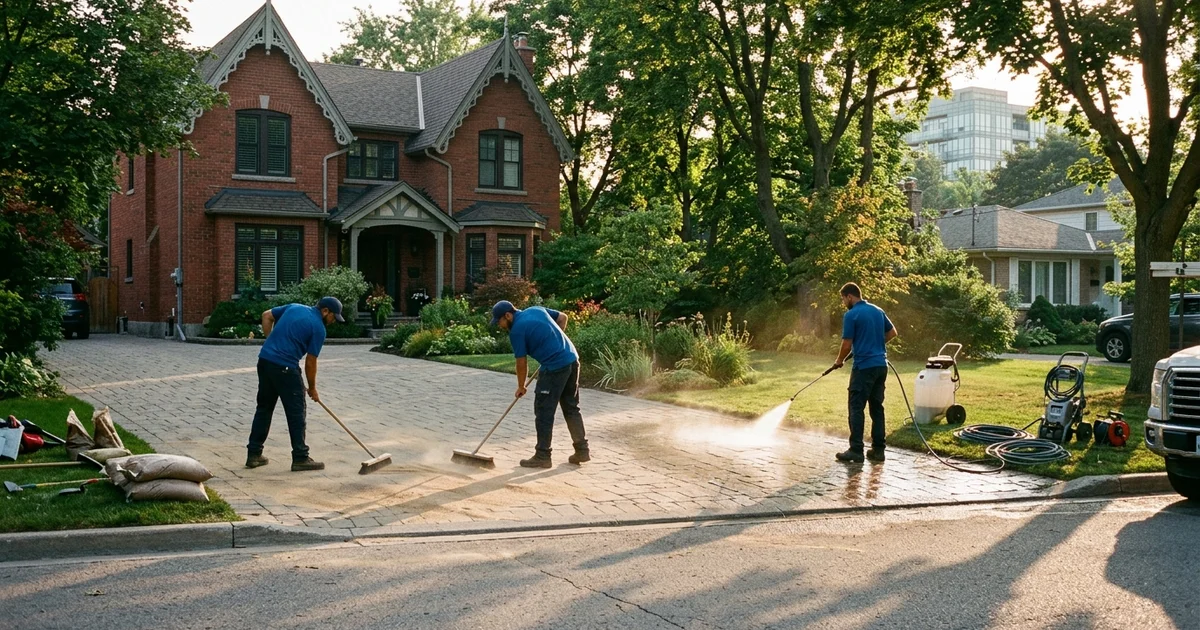
Interlocking stone is everywhere in the GTA, from Leaside driveways to Angus Glen patios. It looks great when it is tight and clean. After a few Toronto winters, though, most interlock shows the same symptoms: empty joints, weeds, ant hills, a grey film and a few pavers that rock underfoot. The fix is not just cleaning. It is cleaning, re-sanding and sealing, done in the right order and with the right pressure.
Why Interlock Joints Fail in Toronto
The sand in the joints is what makes interlock work. It locks pavers together and spreads load across the surface. Toronto’s freeze-thaw cycles attack it constantly. Water seeps into the joints, freezes, expands and pushes sand out. Spring melt washes more away. Road salt adds white efflorescence on top.
Once joints open up, weeds and ants move in, water reaches the base and pavers start to shift. That is why a spring check of your joints matters more than how the surface looks.
Pressure and Nozzle Specs That Protect Pavers
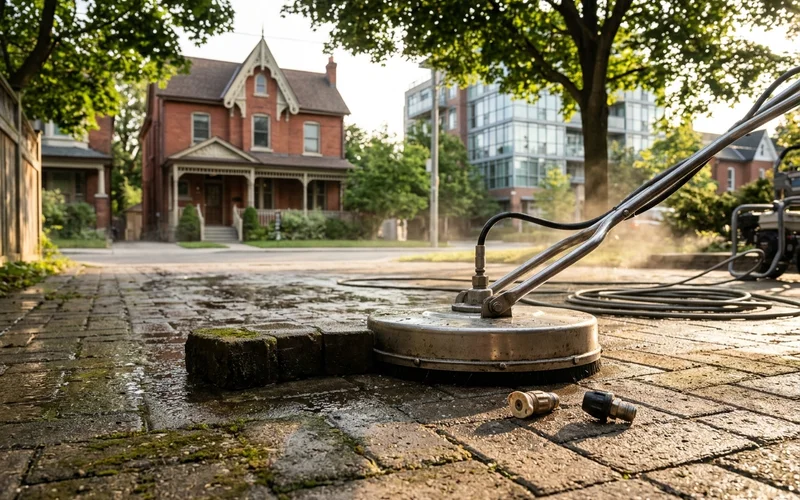
The biggest risk to interlock during cleaning is the cleaning itself. Here is what we use and why:
| Tool | Where we use it | Why |
|---|---|---|
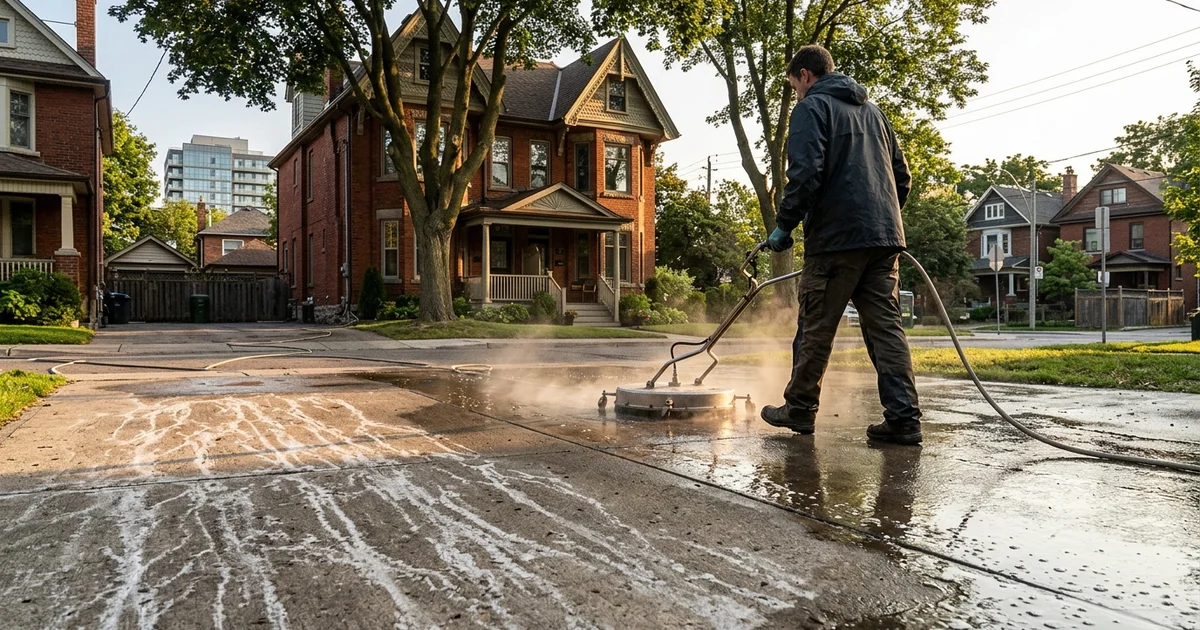
| Rotary surface cleaner | Main field of the driveway or patio | Even cleaning at a fixed height, no stripes, minimal joint disturbance |
| 25-degree nozzle | Borders, edges, steps | Controlled fan for detail work |
| 40-degree nozzle | Rinsing and delicate pavers | Wide, gentle spray |
| Turbo tip | Isolated stubborn spots only | Rotating jet, used sparingly on dense pavers |
| 0-degree tip | Never on interlock | Gouges paver faces |
The goal is to clean the face of the paver, not dig into the joint. Some sand will come out, and that is fine, because we replace it the same day.
Watch out for
A contractor who cleans your interlock and leaves without re-sanding. Open joints after cleaning are more vulnerable than before.
Polymeric Sand: How It Bonds and Why It Fails
Polymeric sand is fine sand mixed with polymer binders. After it is swept into dry joints and compacted, a light mist of water activates the binders and the sand hardens into a flexible, firm joint. It resists washout, discourages weeds and keeps ants from tunnelling.
It is not permanent. Years of freeze-thaw, UV and traffic break the bond down, and the joint starts to crumble. When you can scratch sand out with a fingernail, or weeds are back, it is time to replace it.
The key to a good install is a dry surface. Polymeric sand swept onto damp pavers can stick to the faces and leave a haze. That is why we clean in the morning, let the pavers dry and re-sand later in the day.
Sealer Options
Sealing protects the paver surface from stains, slows fading and helps the joint sand last longer.
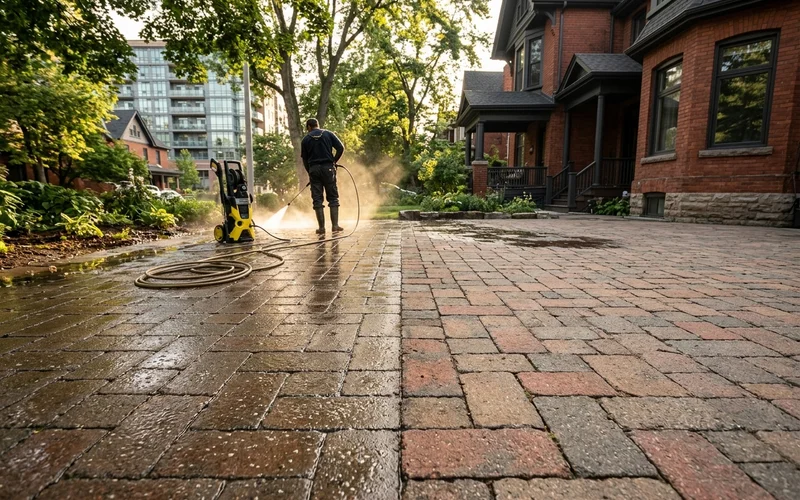
- Water-based penetrating sealer keeps a natural, matte look. It soaks into the paver and lets moisture escape, which suits most driveways.
- Solvent acrylic wet-look sealer deepens colour and adds a light sheen. Popular on patios and front walks where appearance matters most.
When to Reseal: Five Signs
- Joint sand is low or crumbling after winter
- Weeds or ants are appearing between pavers
- Colours have faded or look chalky
- Water soaks in instead of beading on the surface
- White efflorescence keeps returning
Pricing and Same-Visit Service
Full service, meaning clean, polymeric re-sand and seal, runs $3.50-$5.50 per square foot depending on condition, with a $450 minimum. Most residential driveways and patios land between $450 and $1,200. We do all three steps in one visit, weather permitting. Full details are on our interlocking stone cleaning page.
If your driveway is poured concrete rather than pavers, see driveway cleaning and our guide to removing road salt stains. For the rest of the property, pressure washing covers every surface, and power washing vs pressure washing vs soft washing explains which method suits each one.
We restore interlock as part of our GTA power and pressure washing work, including large driveways in Angus Glen and Cathedraltown through our Markham crew.
Joints washing out? Request a free written quote and we will price clean, re-sand and seal per square foot.