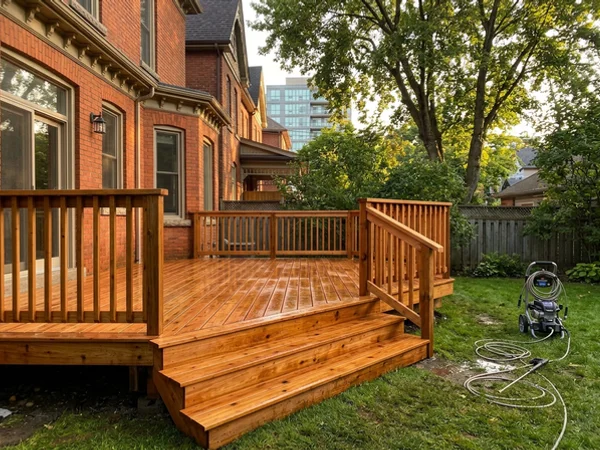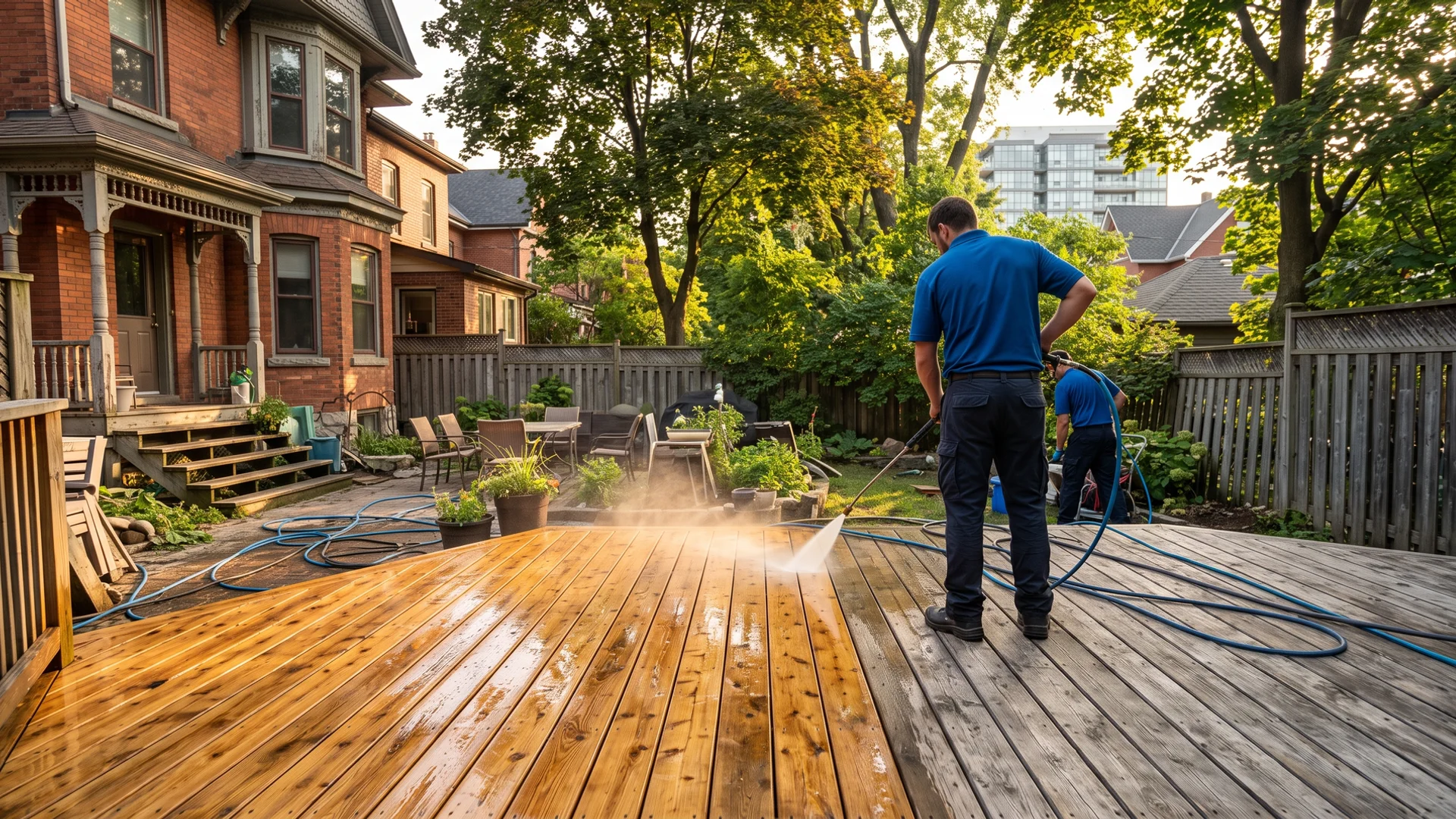
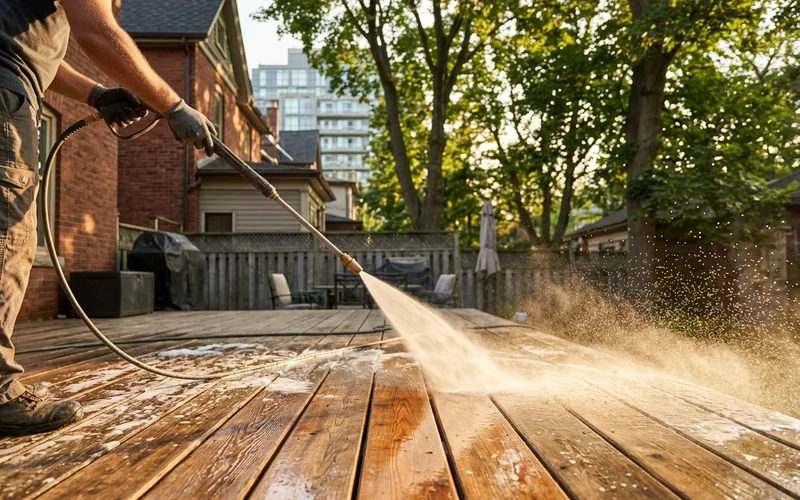
Deck pressure washing in Toronto is a low-pressure job. Cedar and pressure-treated wood go grey and grow mildew under our tree canopy, and composite grows mould in shaded corners. We clean them with wood cleaner, a 40-degree nozzle at low pressure along the grain and a brightener, leaving boards smooth and ready for stain.
Why Do Decks and Fences Go Grey?
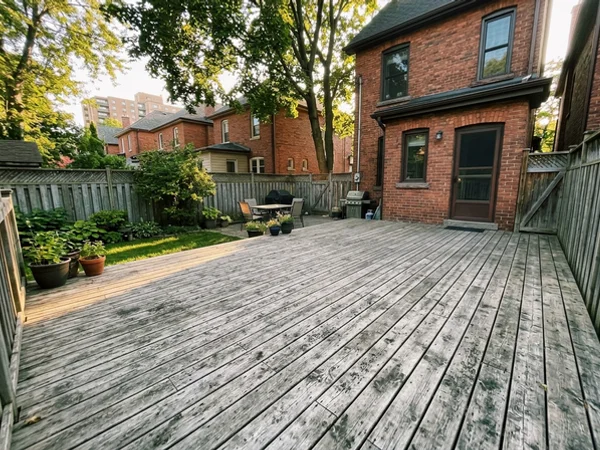
Sunlight breaks down the surface fibres of wood, and rain washes the lignin away, leaving a grey, weathered layer. In Toronto’s humid summers, mildew and algae grow on top of that, especially on shaded decks under big trees in Riverdale, Oakville and on wooded Richmond Hill lots. Composite decking does not go grey the same way, but mould grows in its texture and stains it.
The usual DIY fix, a rental pressure washer with a narrow tip, tears up cedar fibres. The deck looks clean for a day, then dries fuzzy and splintery, and stain goes on blotchy.
What Is Included in Deck and Fence Washing?
- Deck boards, stairs and railings
- Fences, both sides where accessible
- Pergolas and privacy screens on request
- Wood cleaner and brightener to restore tone
- Plant and siding protection around the deck
Wood Types and Methods
| Material | Method |
|---|---|
| Cedar | Wood cleaner, low pressure along the grain, brightener |
| Pressure-treated pine | Wood cleaner, low to moderate pressure, brightener |
| Composite | Composite-safe cleaner, low pressure, no brightener |
| Previously stained wood | Cleaning removes worn stain; heavy stain needs stripper |
When Should You Wash a Deck?
- Spring, before summer entertaining
- Before staining or sealing, which needs clean, dry wood
- When boards are slippery with algae or mildew
- Before listing a home
How Much Does Deck Pressure Washing Cost?
Pricing
A deck (300 sqft) runs $200-$350 and a fence (100 ft) runs $200-$400. Combined deck and fence jobs, multi-level decks and stripping are quoted per surface in writing.
Common Deck and Fence Problems We Solve
Grey, weathered cedar
UV breaks down lignin in the top layer of cedar, leaving loose grey fibres. A wood cleaner lifts that layer, and a brightener restores the warm tone underneath. Without this step, new stain sits on dead fibres and peels within a season.
Black mildew spots and green algae
Shaded decks under maples and oaks grow mildew in the grain and algae between boards. The cleaner kills the growth, and a low-pressure rinse along the grain carries it out of the gaps without driving water into the joists.
Fuzzy, splintered boards from DIY washing
We see this every spring: a deck blasted with a narrow tip that dried furry and rough. We can often improve it with a gentle clean and a light sanding pass on the worst boards before staining. Prevention is easier, which is why we never use high pressure on wood.
Mould in composite decking
Composite resists rot, but mould grows in its surface texture, especially in corners that stay damp. A composite-safe cleaner and low pressure lift it without scarring the protective cap layer. Brighteners are not used on composite.
Tannin and rust stains
Leaves leave dark tannin marks, and metal furniture leaves rust rings. Both respond to targeted treatment during the clean.
How to Prepare for Your Deck Wash
- Move furniture, planters, barbecues and rugs off the deck and away from the fence line.
- Make sure the crew can reach an outdoor tap.
- Keep pets inside during the clean and until the wood has been rinsed.
- If you plan to stain, check the weather for two dry days after our visit.
Staining After Washing
Most cedar and pressure-treated decks are ready for stain 24 to 48 hours after cleaning, depending on shade and weather. A simple test: sprinkle water on the boards. If it soaks in quickly, the wood is ready. If it beads, wait another day. Semi-transparent stains show off cleaned cedar best, while solid stains suit older pressure-treated decks with uneven colour.
DIY Deck Washing vs Professional Cleaning
| DIY with a rental machine | Our deck service | |
|---|---|---|
| Pressure | Often too high, narrow tip | Low pressure, 40-degree nozzle along the grain |
| Chemistry | Water only, or a hardware store mix | Wood cleaner suited to cedar, pine or composite, plus brightener |
| Result on cedar | Fuzzy, furred fibres and wand marks | Smooth boards with even, warm tone |
| Mildew | Returns quickly | Killed in the grain |
| Stain readiness | Blotchy absorption | Even absorption, ready in 24-48 hours |
| Time | A full weekend | A few hours |
A careful homeowner with a 40-degree tip and patience can clean a small pressure-treated deck. Cedar and composite are less forgiving, and the most expensive deck repairs we see start with an afternoon of DIY washing. If you plan to stain, a professional clean usually pays for itself in a better, longer-lasting finish.
How Often Should a Deck Be Cleaned?
Most Toronto decks benefit from a clean every spring, with stain or sealer reapplied every two to three years. Shaded decks under heavy canopy, near the lake or on wooded lots may need a fall rinse too, since mildew grows fastest in damp autumn weather. Fences usually need cleaning every two to three years.
Deck Washing Across the GTA
Power Pressure Washing Toronto restores decks and fences in Riverdale and The Beaches in Toronto, in Bronte and Old Oakville in Oakville, in The Kingsway and Sunnylea in Etobicoke, and across the GTA. Combine with a house wash or interlock restoration for the whole backyard, or see our main pressure washing page.