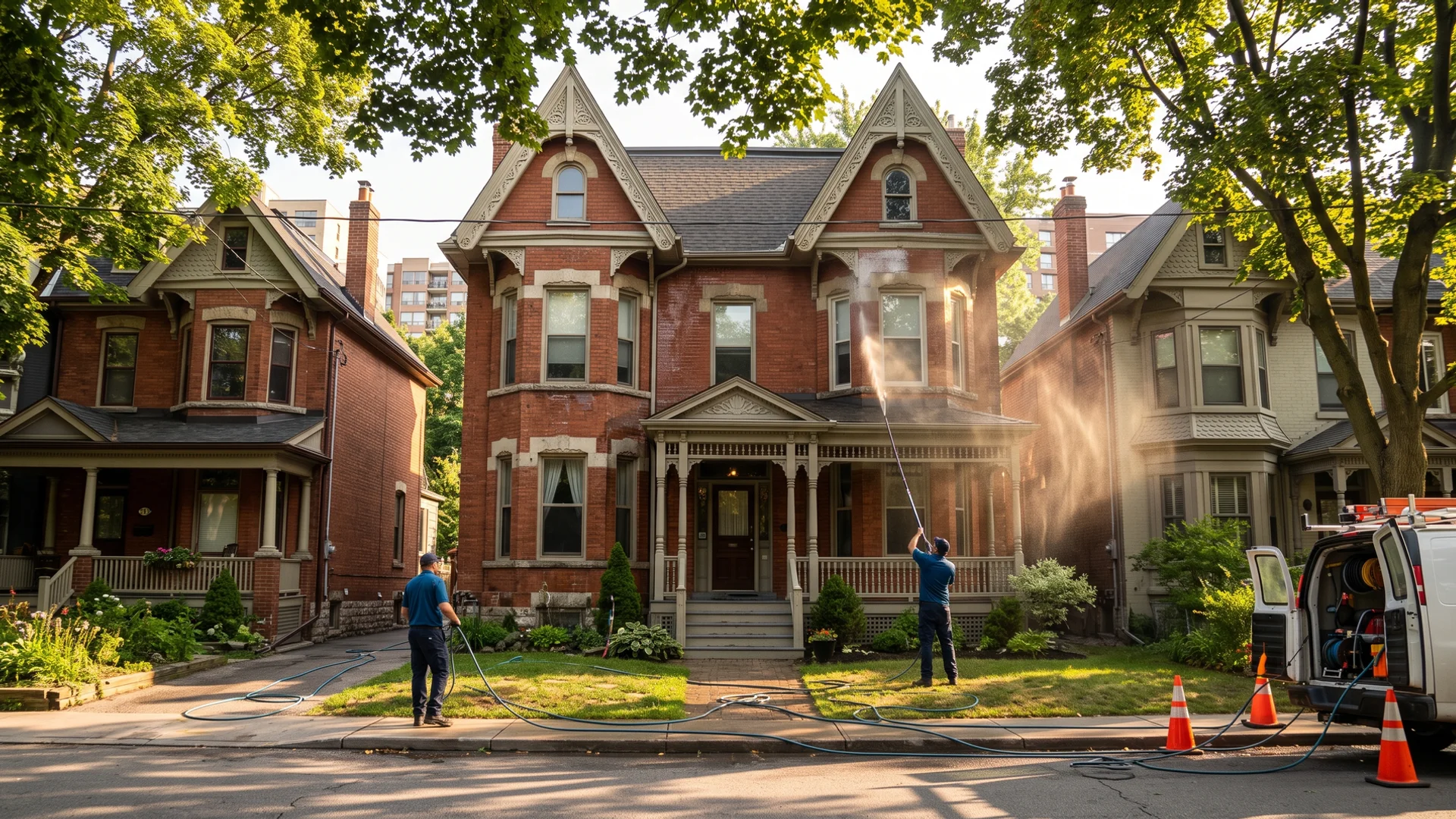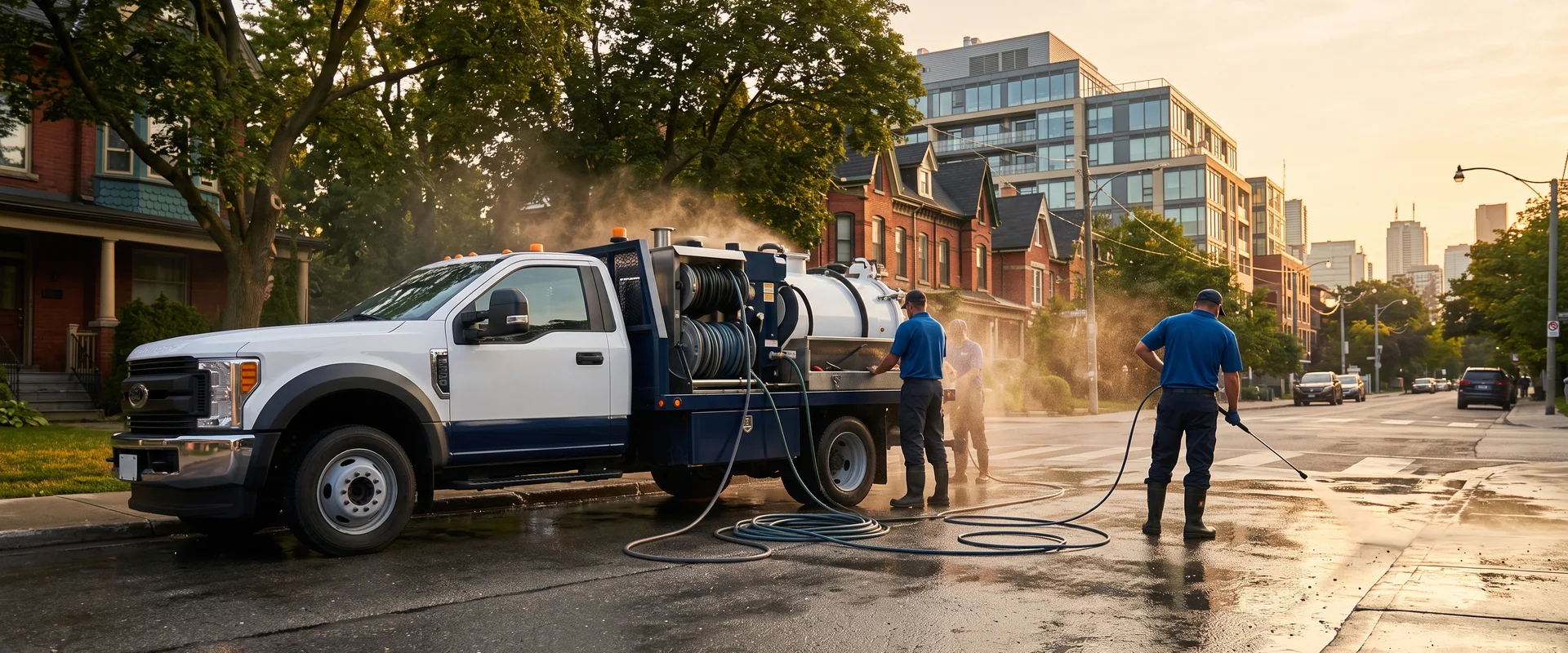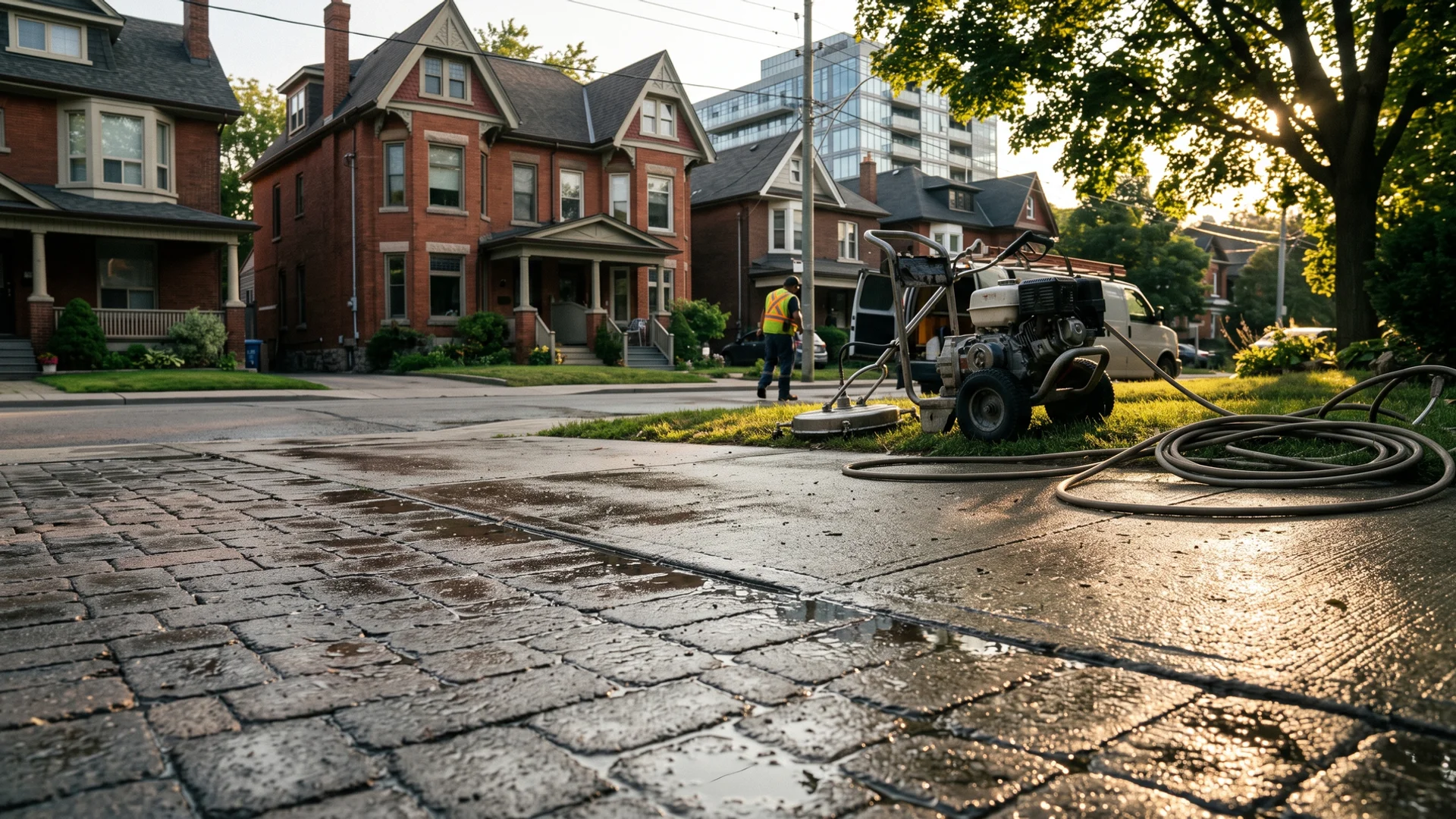
Pressure washing in Toronto is not one job done one way. A salt-stained driveway in Leaside, a green north wall in The Beaches and a Victorian brick porch in The Annex each need a different machine, a different nozzle and sometimes no pressure at all. That is why our trucks carry three rigs, and why every job starts with a written quote per surface.
Why Do Toronto Exteriors Get So Dirty, So Fast?
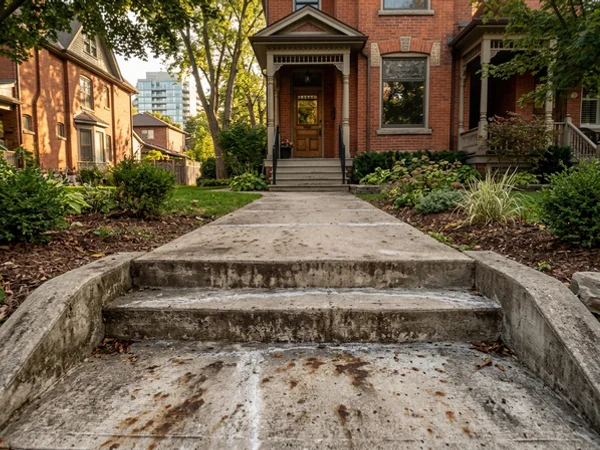
Three forces work on every Toronto exterior. Road salt soaks into concrete pores and comes back as white efflorescence streaks each spring. Freeze-thaw cycles, often 70 to 90 a winter, push water into cracks, mortar joints and interlock gaps, then expand it until the surface spalls or the joint sand blows out. Lake-humid summers under mature tree canopy grow algae on north-facing siding, moss on shaded walks and black streaks on shingles.
A rented cold-water machine and a 0-degree tip can make some of that look better for a week. It can also etch concrete, furr cedar, strip shingle granules and blast the polymeric sand out of interlock. Toronto homeowners see this every spring: stripes on driveways, fuzzy decks and pavers rocking in their joints. The fix is matching the method to the material.
What Is Pressure Washing, and How Is It Different From Power Washing?
People use the two terms the same way, and both are correct in everyday speech. In our trade they mean slightly different things:
- Pressure washing uses cold water at high pressure. It is the right tool for durable surfaces such as poured concrete, brick, interlock and stone, usually with a 25-degree or 40-degree nozzle or a rotary surface cleaner.
- Power washing adds heat. Our 4 gpm 200F hot-water power washer dissolves grease, oil, gum and set road salt that cold water only spreads around.
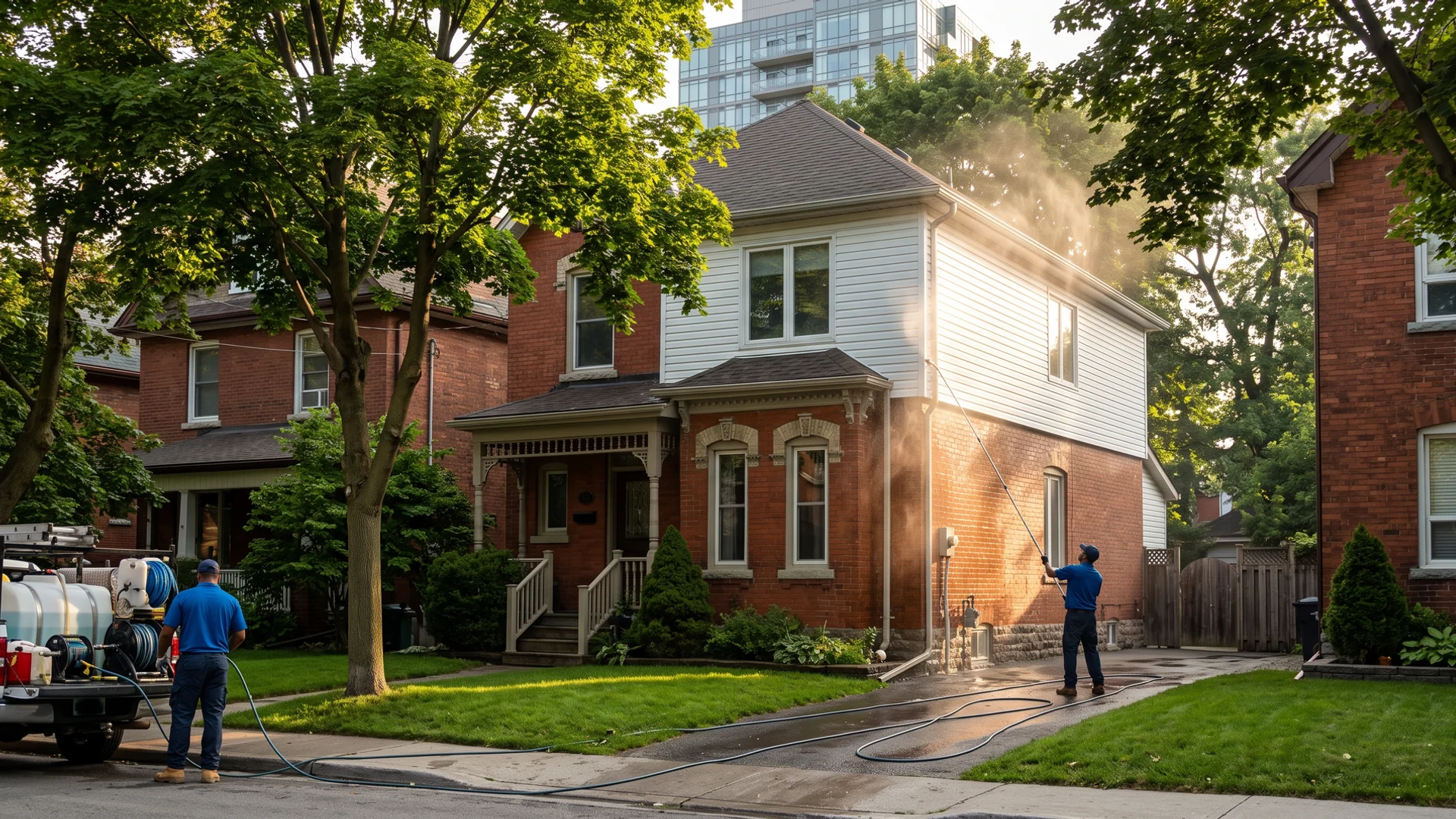
- Soft washing drops the pressure almost to garden-hose levels and lets chemistry do the work. Our SoftWash low-pressure line applies diluted sodium hypochlorite with a biodegradable surfactant to kill algae, mildew and moss at the root on vinyl, stucco, shingles and heritage masonry.
Every truck carries all three. That one fact changes the result on a mixed job, because the crew never has to force a cold rig onto a greasy pad or a pressure wand onto soft siding.
Types of Pressure Washing We Offer in Toronto
Hot-water power washing for concrete, asphalt and grease
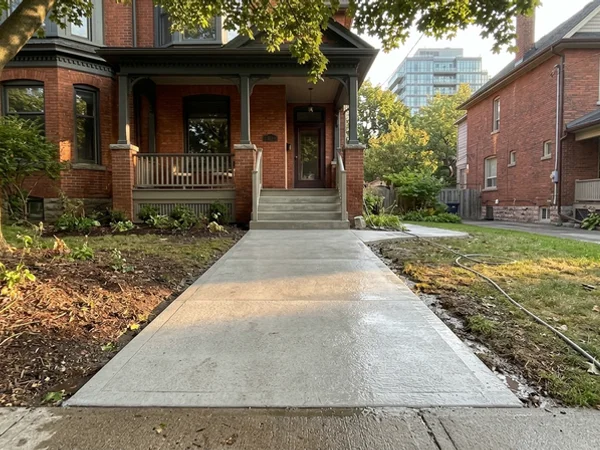
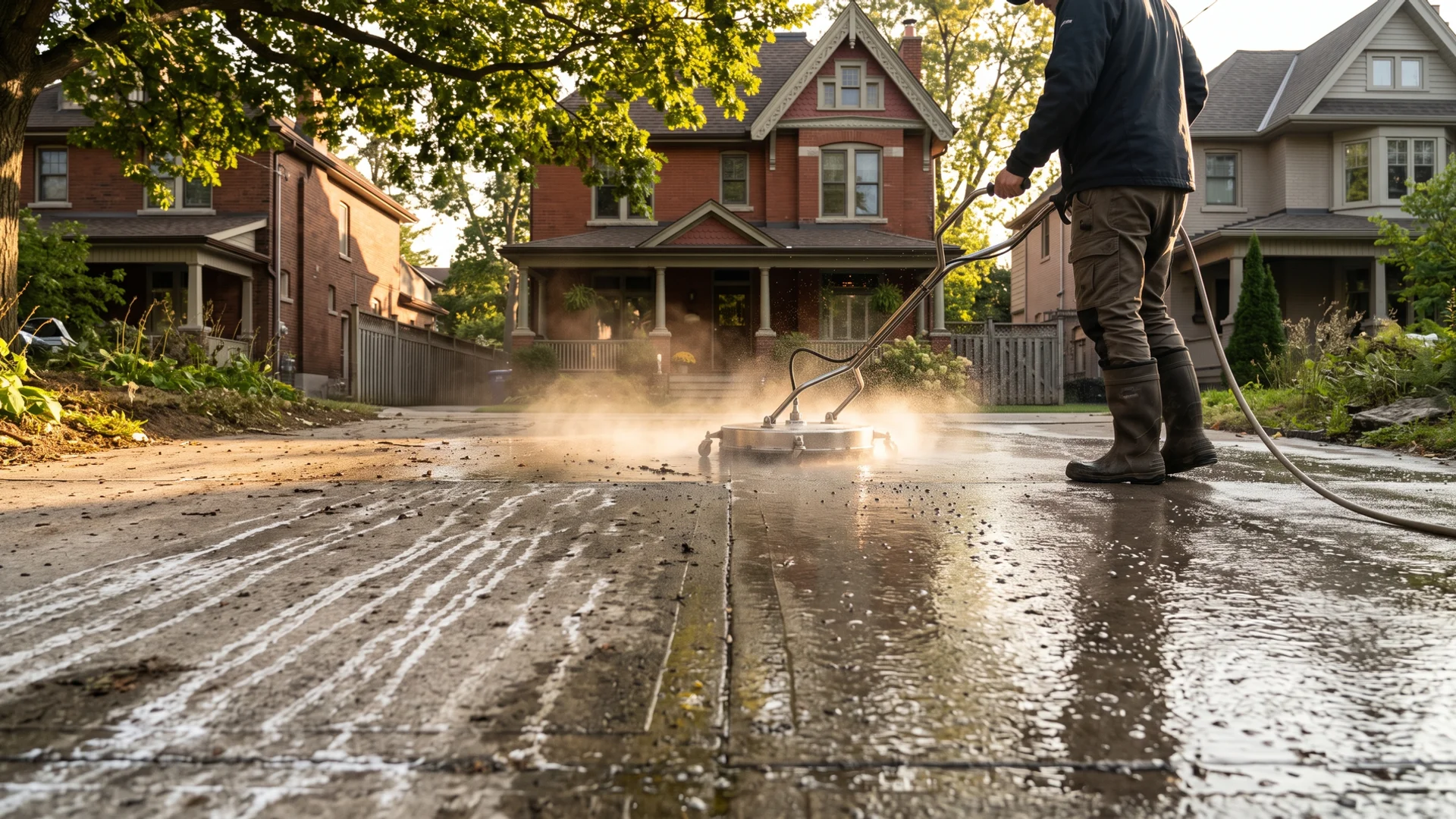
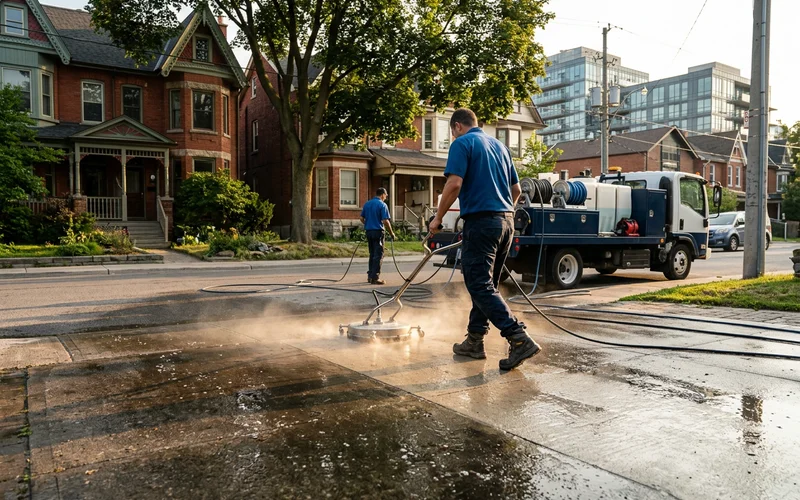
Driveways, garage floors, walkways and commercial pads collect road salt, oil drips and tire marks. Hot water at 200F breaks the bond between those deposits and the surface, and a rotary surface cleaner spreads the cleaning evenly so you do not get wand stripes. This is the core of our driveway cleaning service.
Cold-water pressure washing for brick, stone and interlock
Brick, natural stone and interlock pavers tolerate pressure well when the nozzle and distance are right. We use 25-degree and 40-degree tips on vertical brick and a surface cleaner on flat stone. Interlock gets special treatment because its joint sand matters, which is why we run a separate interlocking stone cleaning service with same-visit re-sanding and sealing.
Low-pressure soft washing for siding, stucco and roofs
Vinyl, aluminum, stucco, EIFS and asphalt shingles should never see a high-pressure wand. Water gets behind vinyl panels, stucco gouges, and shingles lose their protective granules. Our soft washing line applies a measured sodium hypochlorite mix, lets it dwell, and rinses gently. Full exteriors are covered under house washing.
Decks, fences and wood
Cedar and pressure-treated wood need low pressure plus a wood cleaner. Too much pressure lifts the fibres and leaves a fuzzy surface that will not take stain evenly. See deck pressure washing for the full method.
Which Surfaces Get Which Rig?
| Surface | Rig we use | Why |
|---|---|---|
| Concrete driveway, garage floor | 200F hot water + rotary surface cleaner | Dissolves set salt and oil, no stripes |
| Asphalt driveway | Hot water at moderate pressure | Lifts oil without loosening aggregate |
| Interlock pavers | Surface cleaner + polymeric re-sand | Cleans without emptying joints |
| Red brick, stone steps | Cold pressure, 25/40-degree nozzle | Durable surface, controlled angle |
| Vinyl, aluminum siding | SoftWash low-pressure line | No water forced behind panels |
| Stucco, EIFS | SoftWash with EIFS-safe detergent | No gouging or saturation |
| Asphalt shingles | SoftWash only | Protects granules |
| Cedar deck, fence | Low pressure + wood cleaner | Prevents fibre furring |
When Do You Need Pressure Washing?
Most Toronto homeowners call us at one of a few moments:
- After the last salting in spring. White lines on the driveway and front walk are the most common reason people find us. The longer chloride sits, the deeper it works into the concrete.
- Before listing a home. A clean driveway, walkway and siding change how a listing photographs. We work to realtor timelines and weekends.
- When a walkway gets slippery. Algae and moss on shaded stone are a real fall risk for kids and older family members.
- Before staining a deck or sealing a driveway. Stain and sealer only bond to a clean, dry surface.
- In fall, before freeze-up. Clearing algae, pollen and leaf tannins in October means they do not sit under snow all winter.
How Much Does Pressure Washing Cost in Toronto?
Pricing
Our published GTA ranges are: driveway 1-car $150-$250, 2-car $250-$400, full house wash (1,500 sqft) $350-$550, deck (300 sqft) $200-$350, patio and walkways $200-$450, fence (100 ft) $200-$400, roof soft wash $450-$850 and interlock with polymeric reseal $450-$1,200. The Spring + Fall package runs $450-$850 and saves about 15%.
What moves a quote within those ranges:
- Size and number of surfaces. A long double driveway plus walkway plus steps is priced as three line items.
- Type of staining. Oil and rust need degreaser or a treatment pass. Set efflorescence needs hot water and sometimes a neutralizer.
- Access and water supply. Rear yards with no side gate or homes without an outdoor tap take more setup.
- Add-ons. Sealing, polymeric re-sanding or a gutter rinse are separate lines you can accept or skip.
You see all of this in writing before we start. There are no trip fees added on the day and no upsell at the door.
Pressure Washing Yourself vs Hiring a Pro
Rental machines are cold-water, usually 2,500 to 3,000 psi, and come with a few generic tips. That works on some brick and concrete if you are patient and careful. It does not dissolve set salt or oil, it cannot soft wash a roof safely, and it is the most common cause of the etched stripes and furred decks we fix every season. You also do not get a COI, wastewater recovery or anyone accountable for a damaged surface.
For a single small patio, DIY may be fine. For a driveway with salt staining, any siding, any roof, or interlock you want to keep tight, a rig matched to the surface saves you money and repair work.
Pressure Washing Across Toronto and the GTA
Power Pressure Washing Toronto pressure washes homes in every central neighbourhood, from Rosedale and Forest Hill to Riverdale and The Beaches, and across the GTA through our Toronto Central and North York crews, plus Mississauga, Brampton, Markham, Vaughan, Oakville, Scarborough, Etobicoke and Richmond Hill. Commercial owners can see how the same rigs work at scale on our commercial power washing page, including hydrovac wastewater recovery under Toronto Municipal Code 681.