Power Washing vs Pressure Washing vs Soft Washing: Which One Your Toronto Home Needs
Hot-water power washing, cold-water pressure washing or low-pressure soft washing? How Toronto homeowners match the method to concrete, brick, vinyl and shingles.
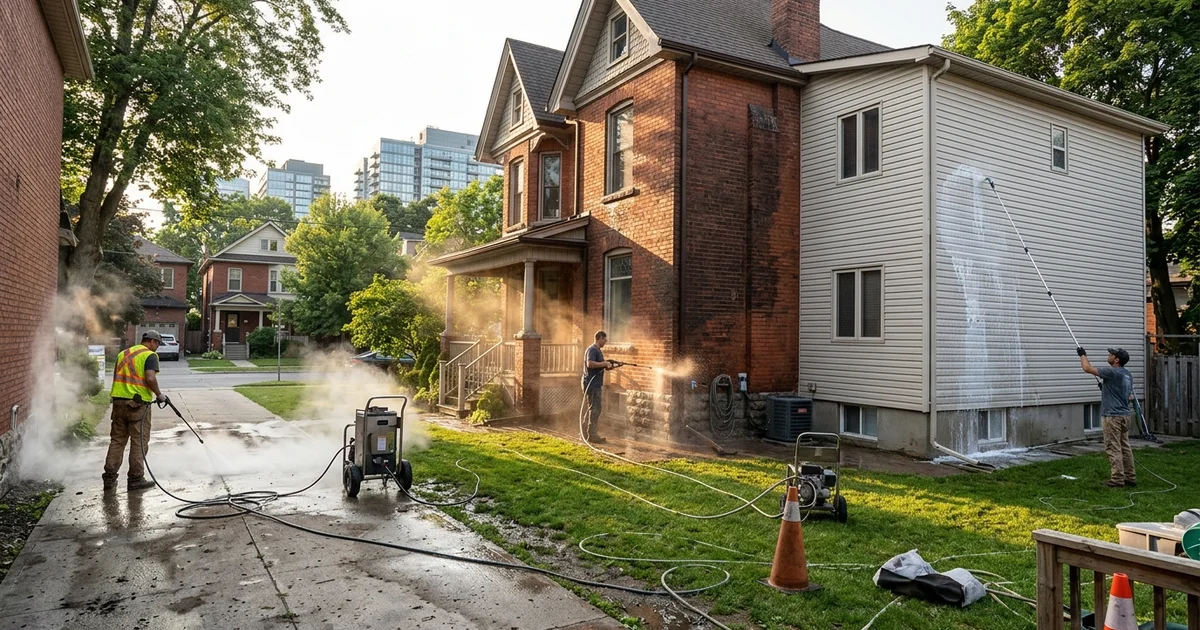
Toronto homeowners ask us one question more than any other: what is the difference between power washing, pressure washing and soft washing, and which one does my house need? The honest answer is that most homes need all three, on different surfaces. Using the wrong one is how driveways get etched, decks get fuzzy and shingles lose years of life.
Here is how each method works, where it belongs, and why our trucks carry all three.
What Is Pressure Washing?
Pressure washing uses cold water at high pressure, usually 2,500 to 4,000 psi, shaped by a nozzle. A 40-degree tip spreads the water into a wide, gentler fan. A 25-degree tip is more focused. A 0-degree tip is a pencil-thin jet that can cut wood and etch concrete, and we almost never use it on a home.
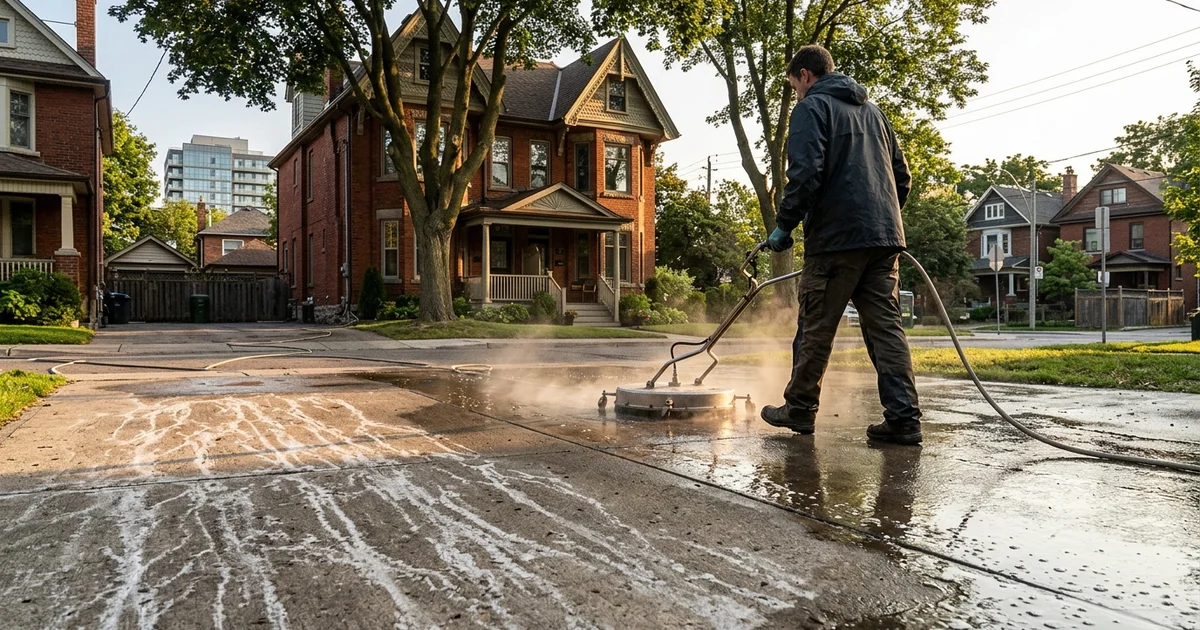
Pressure washing works well on durable surfaces: sound red brick, natural stone steps, poured concrete patios and interlock pavers. On flat surfaces we attach a rotary surface cleaner, which holds the nozzles at a fixed height and spins them, so the result is even and stripe-free.
Where cold pressure falls short is grease, oil and set road salt. Cold water moves those deposits around rather than dissolving them.
What Is Power Washing?
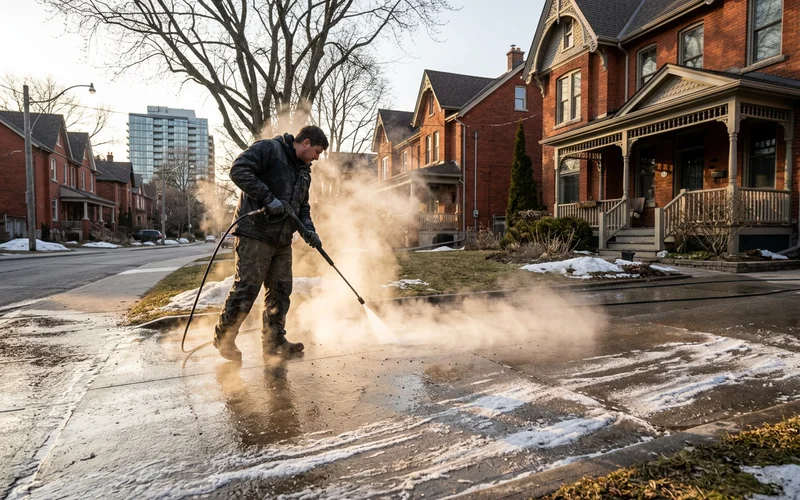
Power washing is pressure washing with heat. Our 4 gpm units heat water to about 200F. Hot water melts grease, emulsifies oil and dissolves the salt crystals that sit inside concrete pores after a Toronto winter. That is why the white lines on a driveway come off with a hot rig and only fade with a cold one.
Rule of thumb
If the stain is greasy, oily or salty and the surface is concrete or asphalt, you want hot water. Our driveway cleaning service is built around it.
Power washing is also the backbone of commercial work: restaurant pads, garage floors and plaza sidewalks full of gum all respond to heat in a way they never do to cold water.
What Is Soft Washing?
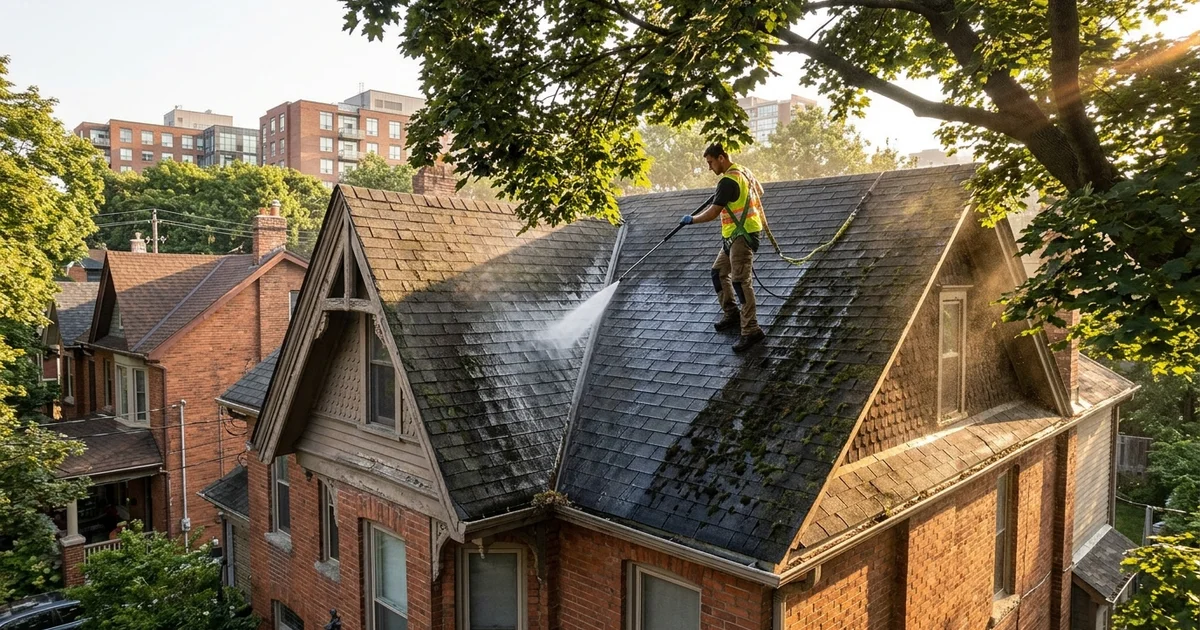
Soft washing turns the logic around. Instead of force, it uses chemistry. A diluted sodium hypochlorite mix with a biodegradable surfactant is applied at about garden-hose pressure, left to dwell for a few minutes, and then rinsed gently. The mix kills algae, mildew, moss and lichen at the root, and the rinse carries them away.
Soft washing is the right method for soft or delicate surfaces:
- Vinyl and aluminum siding
- Stucco and EIFS
- Asphalt shingle roofs
- Heritage brick, limestone and sandstone
- Painted wood
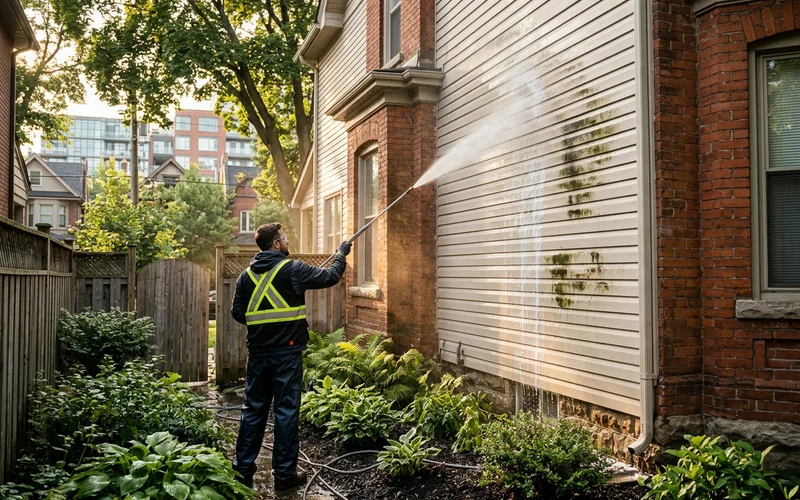
Because the growth is killed rather than knocked off, soft washed surfaces stay clean much longer. Our soft washing page covers heritage masonry in detail, and the roof soft wash guide explains roofs.
Surface-by-Surface Decision Table
| Surface | Best method | Why |
|---|---|---|
| Concrete driveway with salt or oil | Hot-water power washing | Heat dissolves salt and oil |
| Asphalt driveway | Hot water, moderate pressure | Lifts oil without loosening aggregate |
| Interlock pavers | Cold pressure with surface cleaner | Cleans without emptying joints |
| Sound red brick | Cold pressure, 40-degree tip | Durable, needs controlled angle |
| Heritage brick, limestone | Soft wash | Protects soft stone and lime mortar |
| Vinyl or aluminum siding | Soft wash | No water forced behind panels |
| Stucco or EIFS | Soft wash | No gouging or saturation |
| Asphalt shingles | Soft wash only | Keeps protective granules on |
| Cedar deck | Low pressure plus wood cleaner | Avoids fibre furring |
Why One Truck Carries All Three Rigs
A typical Toronto property mixes surfaces. A Leaside home might have a salt-stained concrete driveway, interlock walkway, vinyl siding on the back and a mossy north roof slope. If a contractor arrives with one cold-water machine, something on that list gets the wrong treatment.
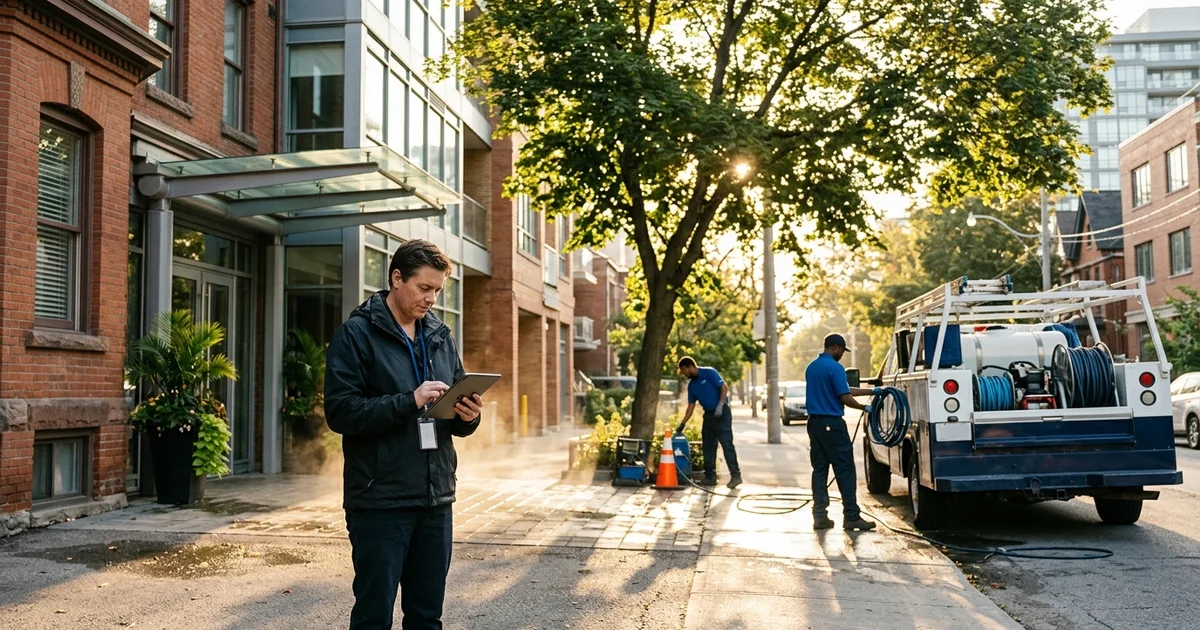
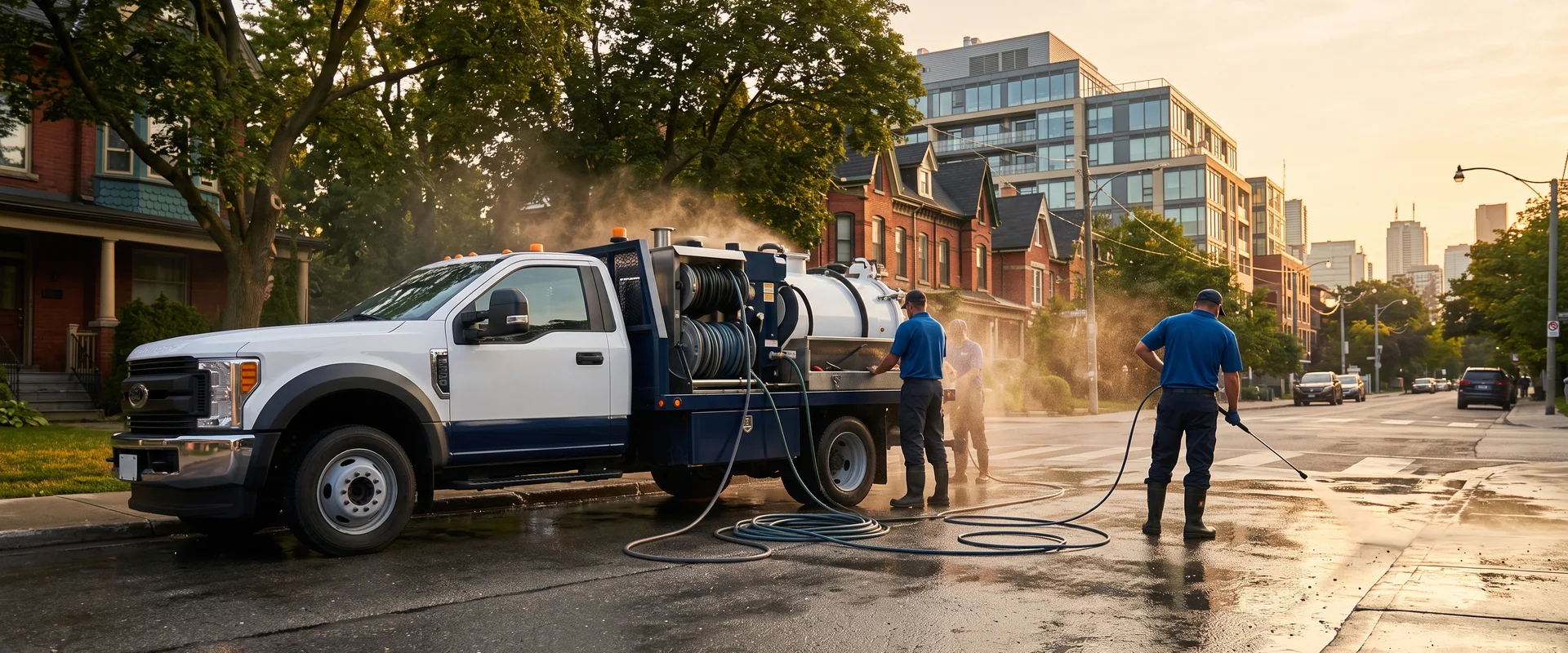
That is why every one of our trucks carries a hot-water power washer, a cold-water pressure unit and a SoftWash low-pressure line. The crew picks the right one for each surface, and you get a written quote per surface before any work. See how it comes together on our main pressure washing page and the house washing service for full exteriors.
What About DIY?
Rental machines are cold-water only and come with a handful of tips. They can handle a small brick patio if you are careful. They cannot dissolve set salt, they should never touch a roof, and they are the most common cause of etched concrete and furred cedar we see. If your concern is road salt, read our guide to removing road salt stains from a Toronto driveway before you rent anything.
The Bottom Line
- Grease, oil, salt on concrete: power washing (hot water)
- Dirt on durable brick, stone, pavers: pressure washing (cold water, right nozzle)
- Algae, mildew, moss on soft surfaces: soft washing (low pressure, chemistry)
We offer power and pressure washing across the GTA, including every central neighbourhood covered by our Toronto Central crew.
Not sure which method your home needs? Request a free written quote and we will match the rig to every surface before any work starts.