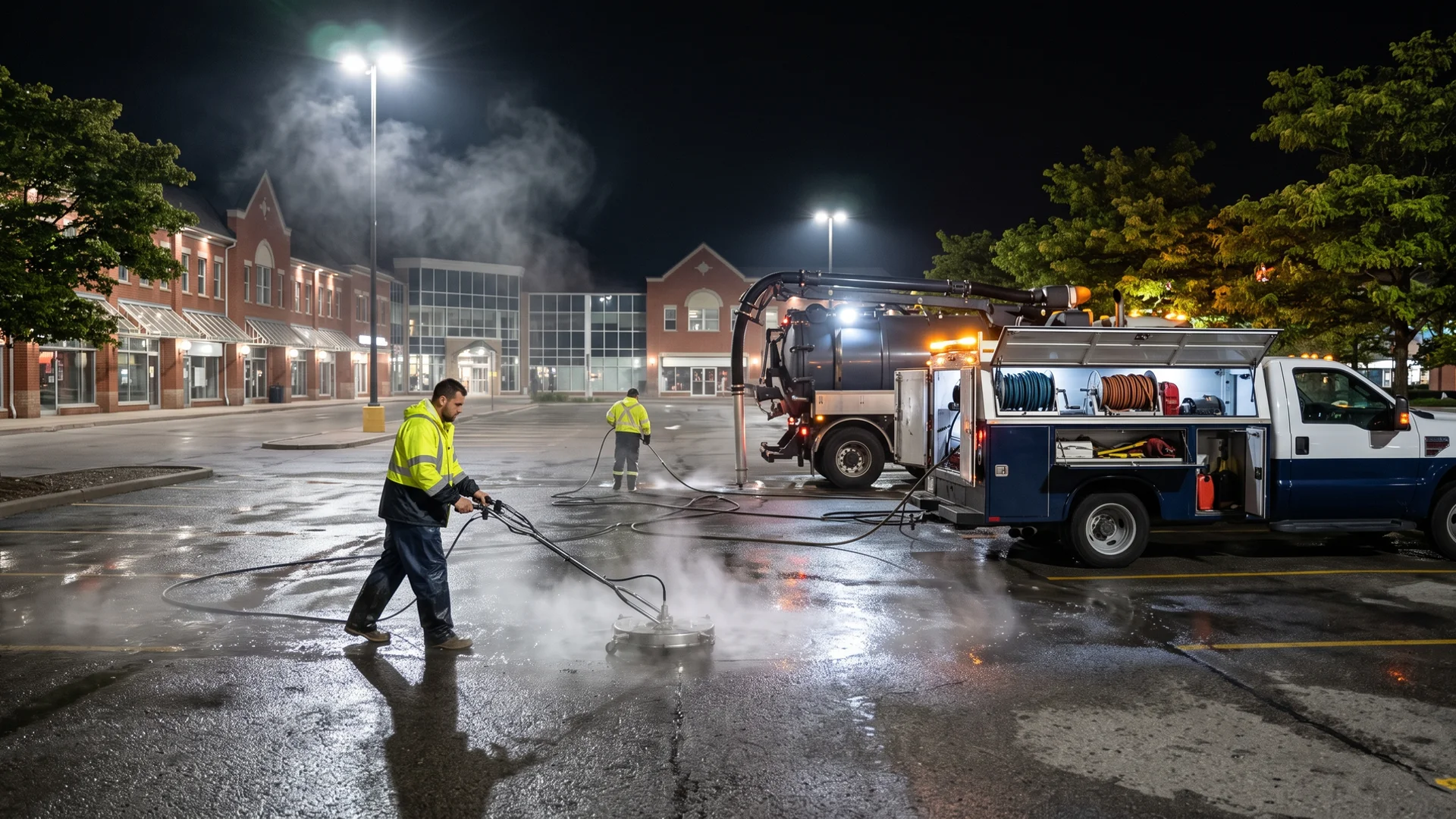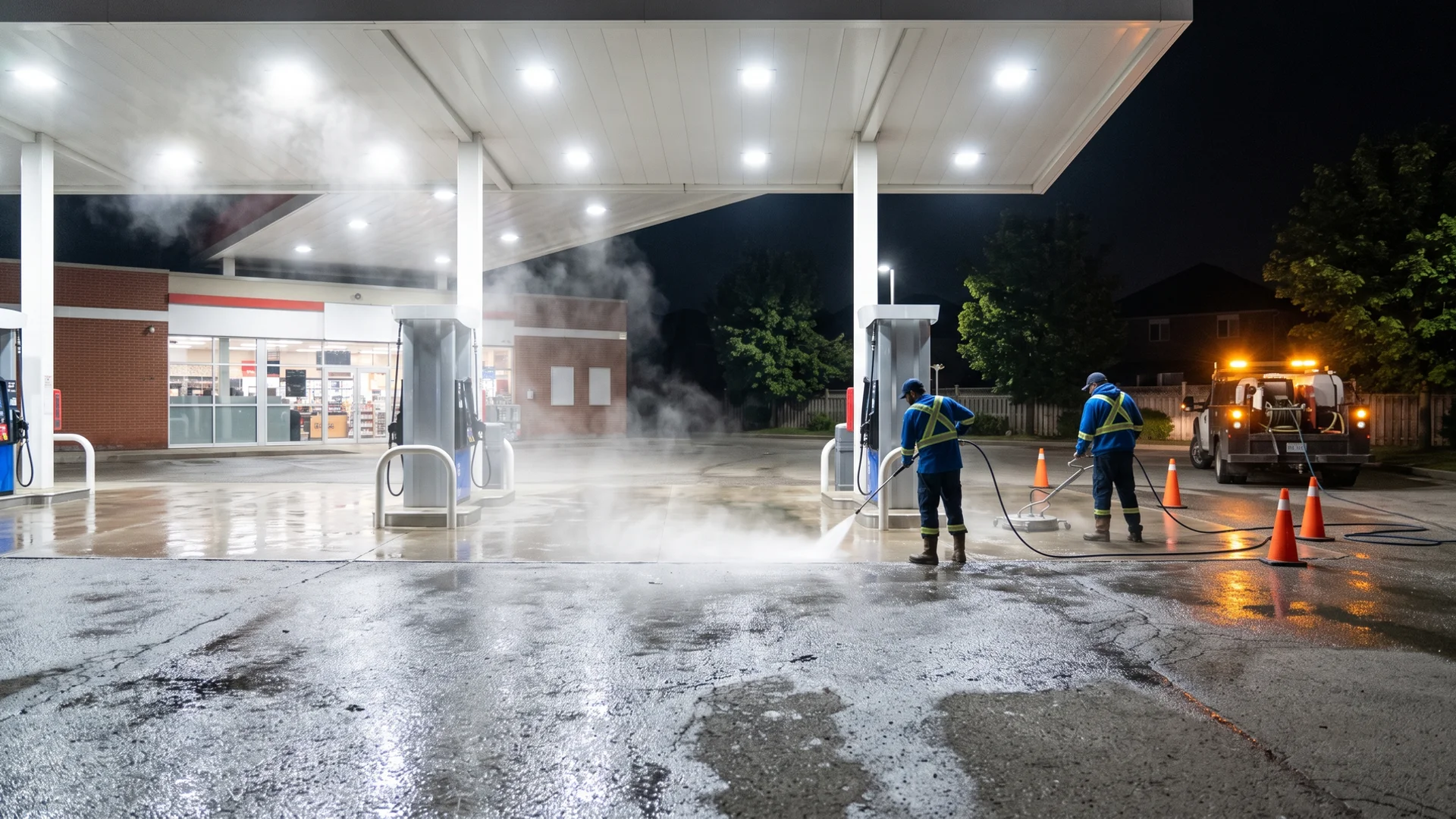
Gas station power washing in Toronto has to clean fuel and oil staining without letting a drop of contaminated water reach the storm system. We wash forecourts island by island overnight, with hot water and degreaser on the stains, a soft wash on the canopy and our hydrovac capturing every litre of wastewater.
Why Do Forecourts Need Specialist Washing?
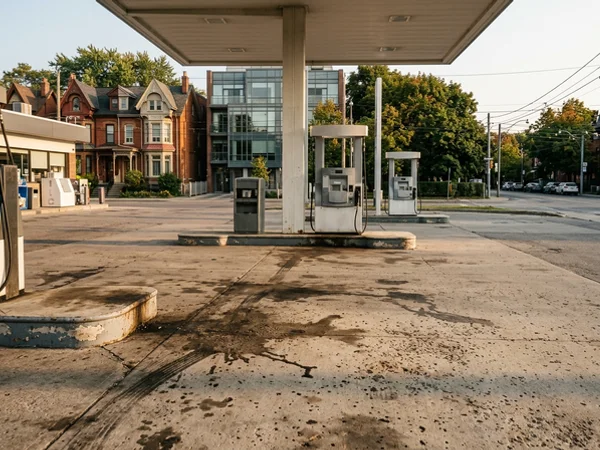
Every fill-up risks a drip, and every car that idles at a pump can leave oil. Over months, forecourt concrete darkens with fuel and oil staining, tire marks and winter salt. Islands collect grime around dispensers and bollards. Canopies dull with road film, which makes the lighting and branding look tired.
Forecourts are also one of the most sensitive places to wash. Wash water there carries hydrocarbons, and it must not be rinsed into catch basins. Many stations have an oil-water separator, but it is not designed to take a full forecourt wash. Capturing the water at the source is the safe approach.
What Is Included in Gas Station Power Washing?
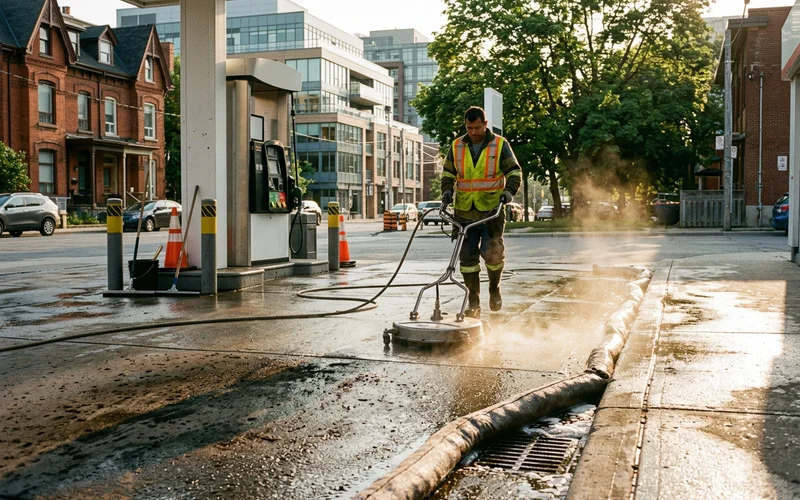
- Forecourt concrete degreased with 200F hot water and rotary surface cleaners
- Pump islands, curbs and bollards
- Canopy fascia and underside, soft washed at low pressure
- Convenience store entrance and sidewalk
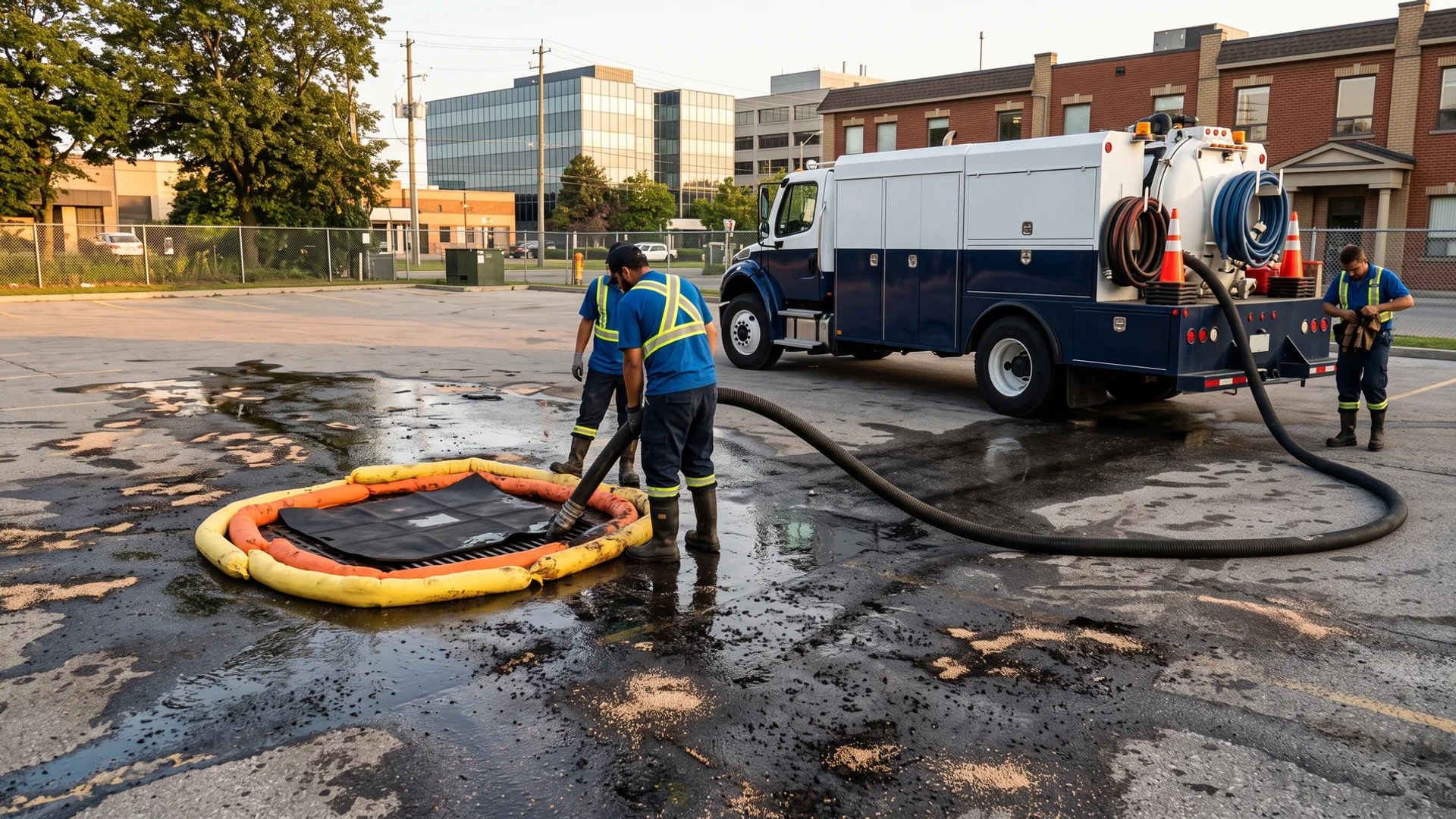
- Hydrovac capture of all wash water with drains covered
Forecourt Surfaces and How We Clean Them
| Surface | Method | Why |
|---|---|---|
| Forecourt concrete | 200F hot water, degreaser and rotary surface cleaners | Lifts fuel and oil staining evenly, without wand stripes |
| Pump islands, curbs and bollards | Hand-held wand at controlled pressure | Removes road film and fuel residue around dispensers |
| Canopy fascia and underside | Low-pressure soft wash | Restores lighting and branding without stripping finishes |
| Wash water | Hydrovac capture with drains covered | Keeps hydrocarbons out of catch basins and the storm system |
How We Keep Pumps Open
We work overnight when traffic is lowest and close one island at a time with cones and signage. Customers fuel at the open islands while we wash. Canopy work happens in the same visit from a lift where needed.
When Should a Station Book?
- Monthly or quarterly for forecourt and islands
- Spring, after salt season
- Before a brand inspection or ownership change
- After a spill, through our oil spill cleanup service
How Much Does Gas Station Washing Cost?
Pricing
We quote per site in writing based on island count, canopy size, staining and disposal volume. Monthly and quarterly programs lock the per-visit price for 12 months.
Common Forecourt Problems We Solve
Dark fuel staining around dispensers
Small drips at every fill-up build into dark rings around each island. Hot water and degreaser lift fresh staining and lighten older marks considerably.
Oil drips in the approach lanes
Cars idling in line leave oil spots in predictable rows. These get pre-treated before the main wash.
Slippery concrete in wet weather
A film of fuel and oil makes forecourts slick, especially in rain and freezing drizzle. Removing it improves footing for customers walking to the store.
Grimy pump islands and bollards
Curbs, island caps and bollards collect road film and fuel residue. They are cleaned by hand-held wand at controlled pressure.
Dull canopies and lights
Road film on canopy fascia and the underside dims the lighting and fades branding. A soft wash restores brightness without stripping finishes.
Salt and grit after winter
Spring forecourts carry a white crust of salt and sand. Hot water and surface cleaners clear it, and catch basins can be extracted on the same visit.
How Island-by-Island Washing Works
- Cones and signage close one island. The rest stay open.
- Drain mats cover nearby catch basins and trench drains.
- Fuel and oil spots are pre-treated with degreaser.
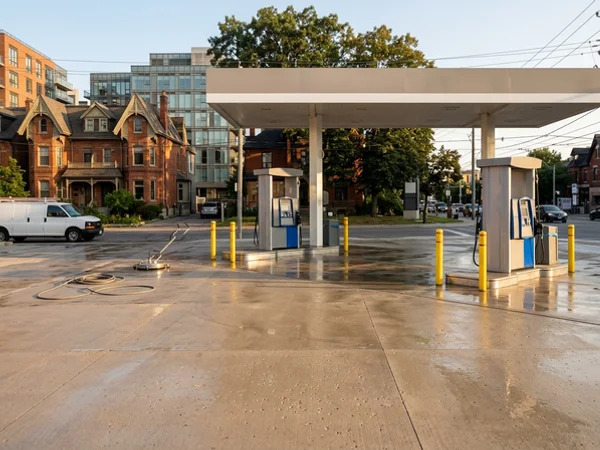
- A 200F hot-water rotary surface cleaner washes the island area, while the hydrovac recovers the water.
- The island reopens and the crew moves to the next one.
- Canopy, store entrance and sidewalk follow once the forecourt is done.
Working With Your Oil-Water Separator
Most stations have an oil-water separator, but a full forecourt wash can overload it. Capturing wash water at the surface with our hydrovac protects the separator. If the separator itself needs service, our truck can vacuum it, and larger programs run through our sister brand, Hydrovac Toronto.
Why Station Staff Should Not Hose the Forecourt
Hosing a forecourt spreads fuel residue and sends contaminated water toward catch basins and the oil-water separator. It also leaves slippery patches that are worse than before. For day-to-day spills, absorbent and a broom are the right tools. Leave the full wash to a crew with hot water, drain protection and wastewater recovery.
How Often Should a Forecourt Be Washed?
Busy highway and arterial stations often book monthly forecourt washing, with canopy cleaning in spring and fall. Quieter neighbourhood stations usually do well on a quarterly schedule. Every station benefits from a spring clean once the last salt is down.
Gas Station Washing Across the GTA
Power Pressure Washing Toronto washes forecourts along the main arterials in Brampton, across Mississauga, and throughout Toronto, Vaughan and Scarborough. Station lots pair with parking lot power washing, and service bays with mechanic shop floor cleaning.