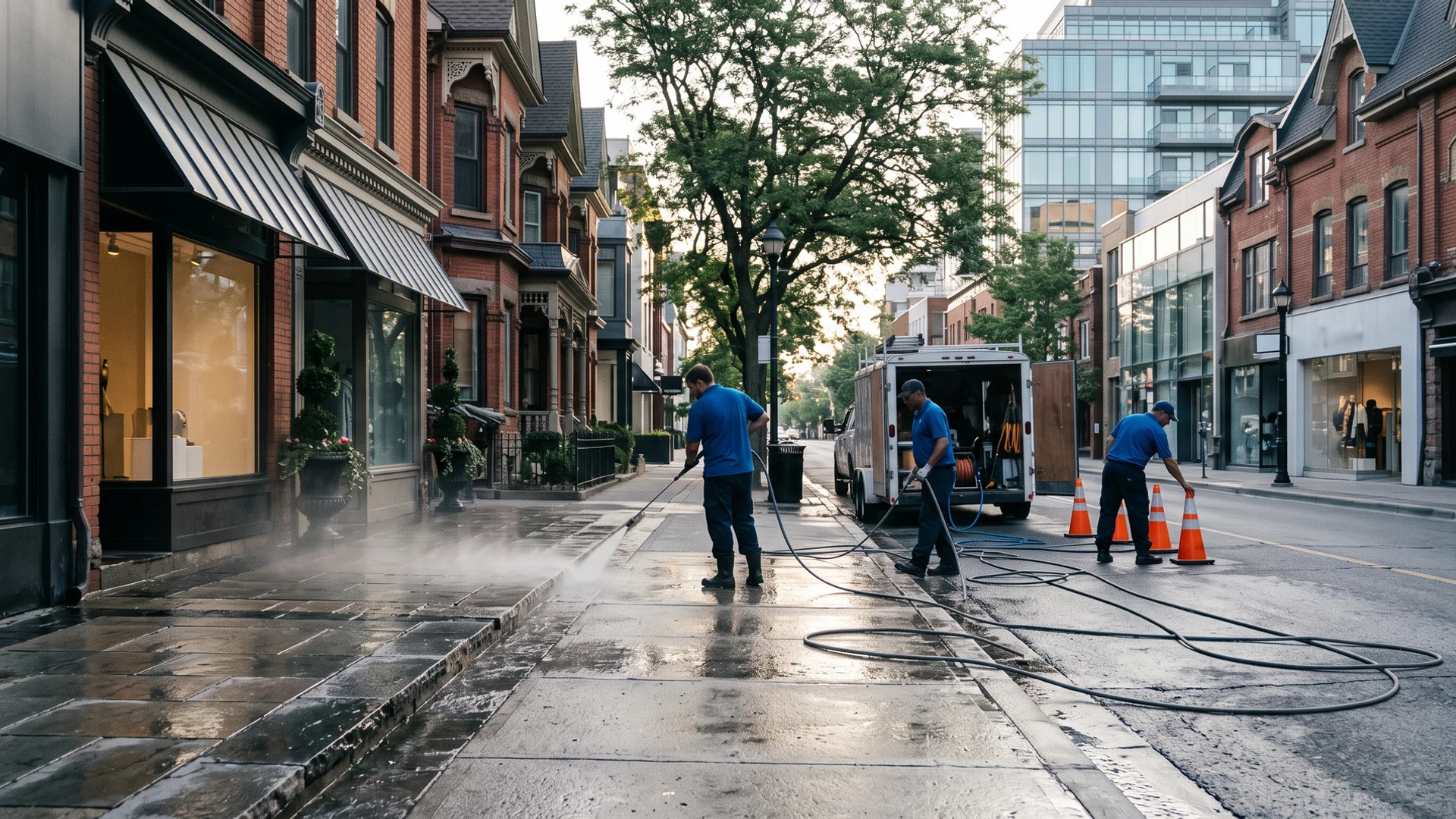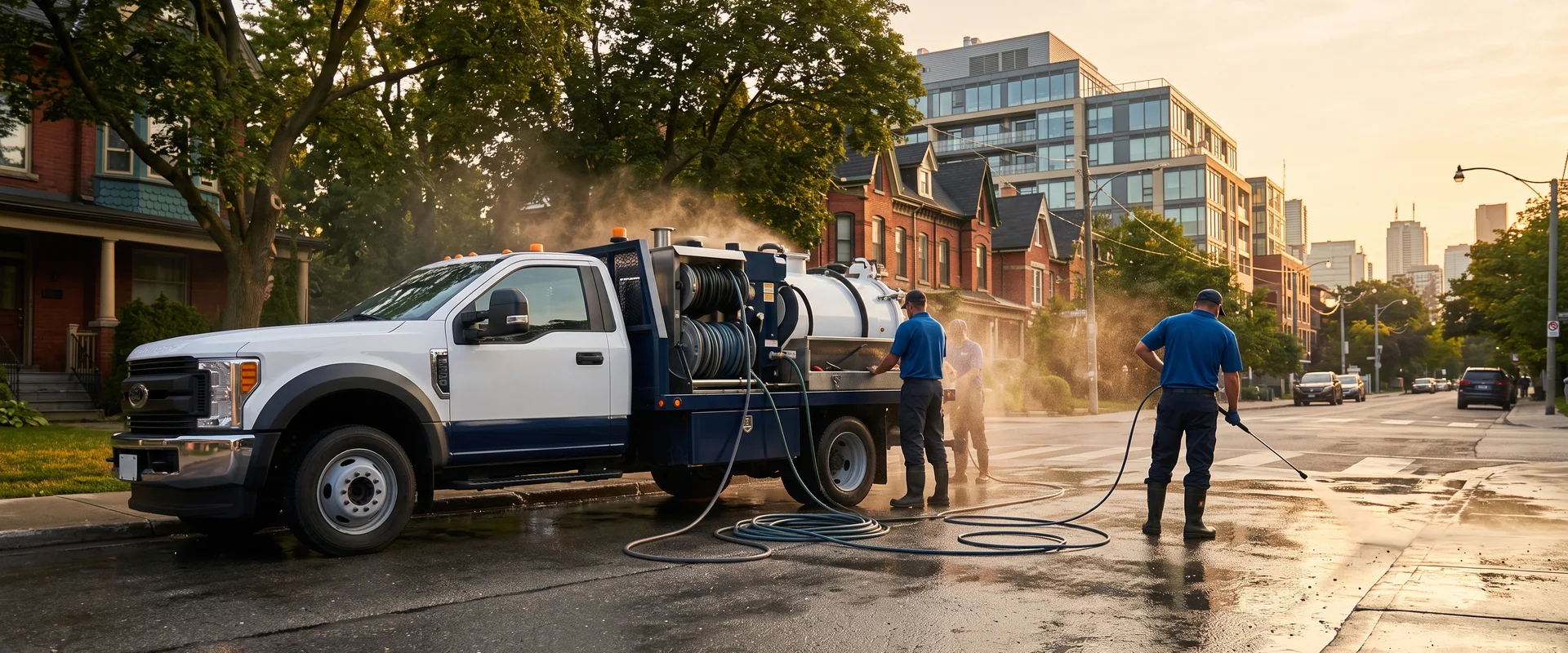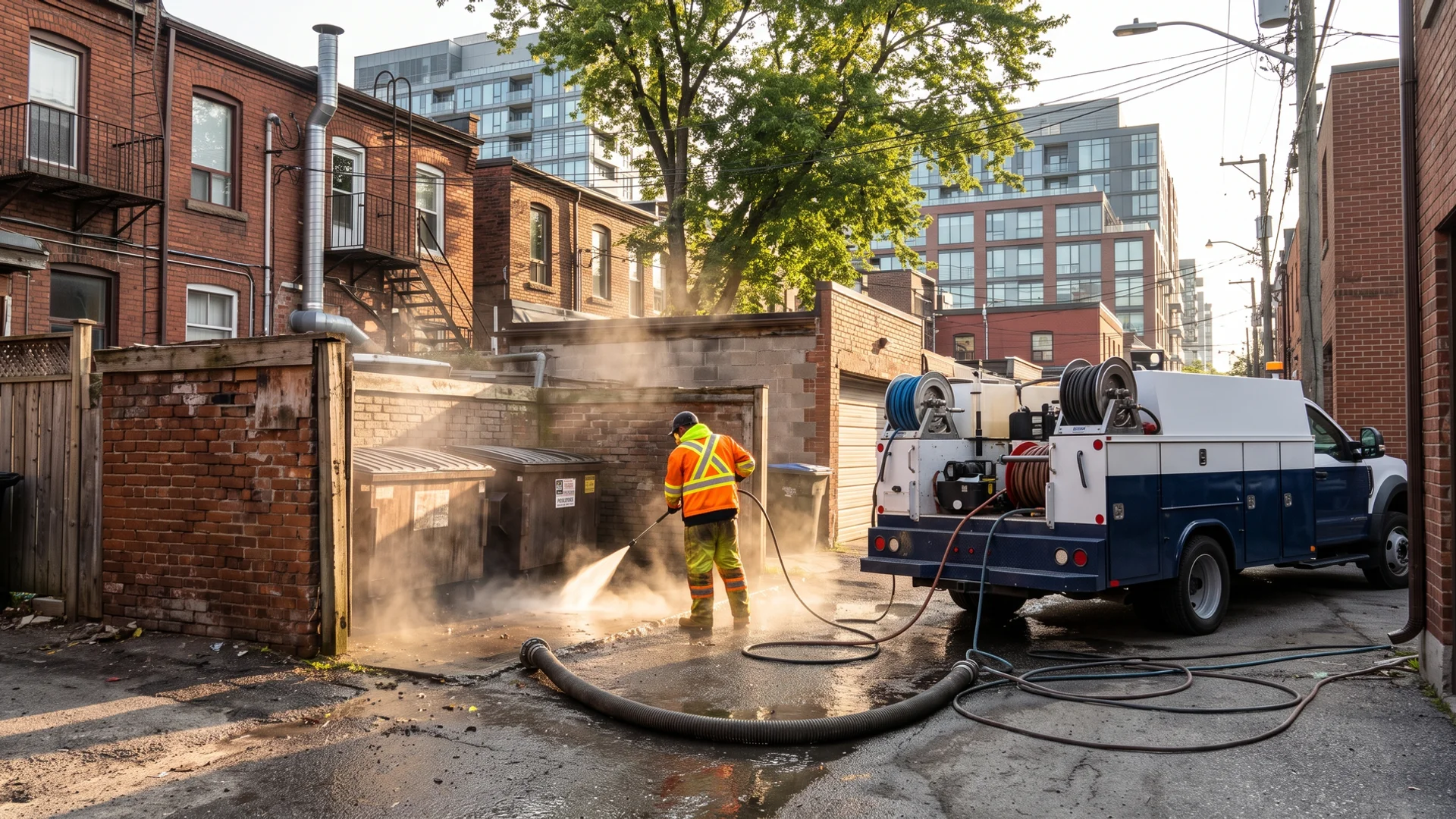
Dumpster pad cleaning in Toronto is about grease, leachate and smell. We degrease restaurant and plaza pads with 200F hot water and enzyme degreaser, treat the odour, and recover every litre of wastewater with our hydrovac so none of it ends up in the lane drain.
Why Do Dumpster Pads Get So Bad?
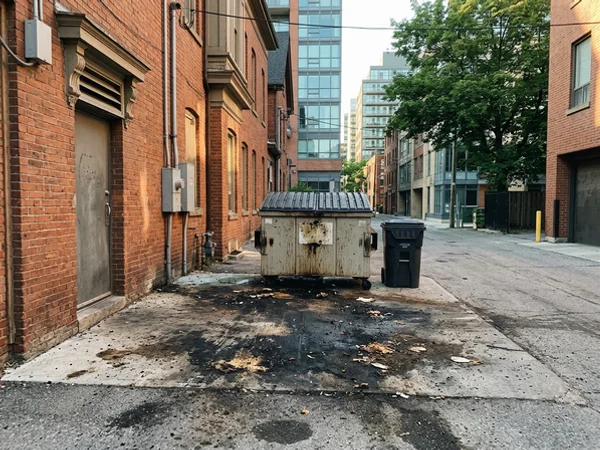
Waste bins leak. Liquid from food waste, called leachate, drips onto the pad along with cooking grease carried out from the kitchen. In summer it ferments, smells and draws fruit flies, wasps and rodents. The concrete soaks it up, so the smell comes back hours after the bin is emptied. Staff slip on greasy pads, and neighbours in shared lanes complain.
Hosing the pad pushes grease and leachate straight into the nearest lane drain, which is exactly what Toronto Municipal Code 681 prohibits. It also does not cut the grease, so the smell returns.
What Is Included in Dumpster Pad Degreasing?
- Pad degreasing with enzyme or alkaline degreaser and 200F hot water
- Surface cleaner finish for an even result on large pads
- Enclosure walls, gates and bollards
- Odour neutralizer applied after cleaning
- Hydrovac containment with drain covers and berms
How the Cleaning Works
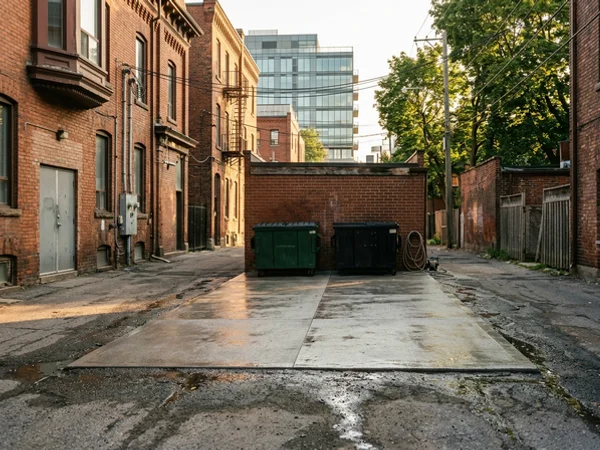
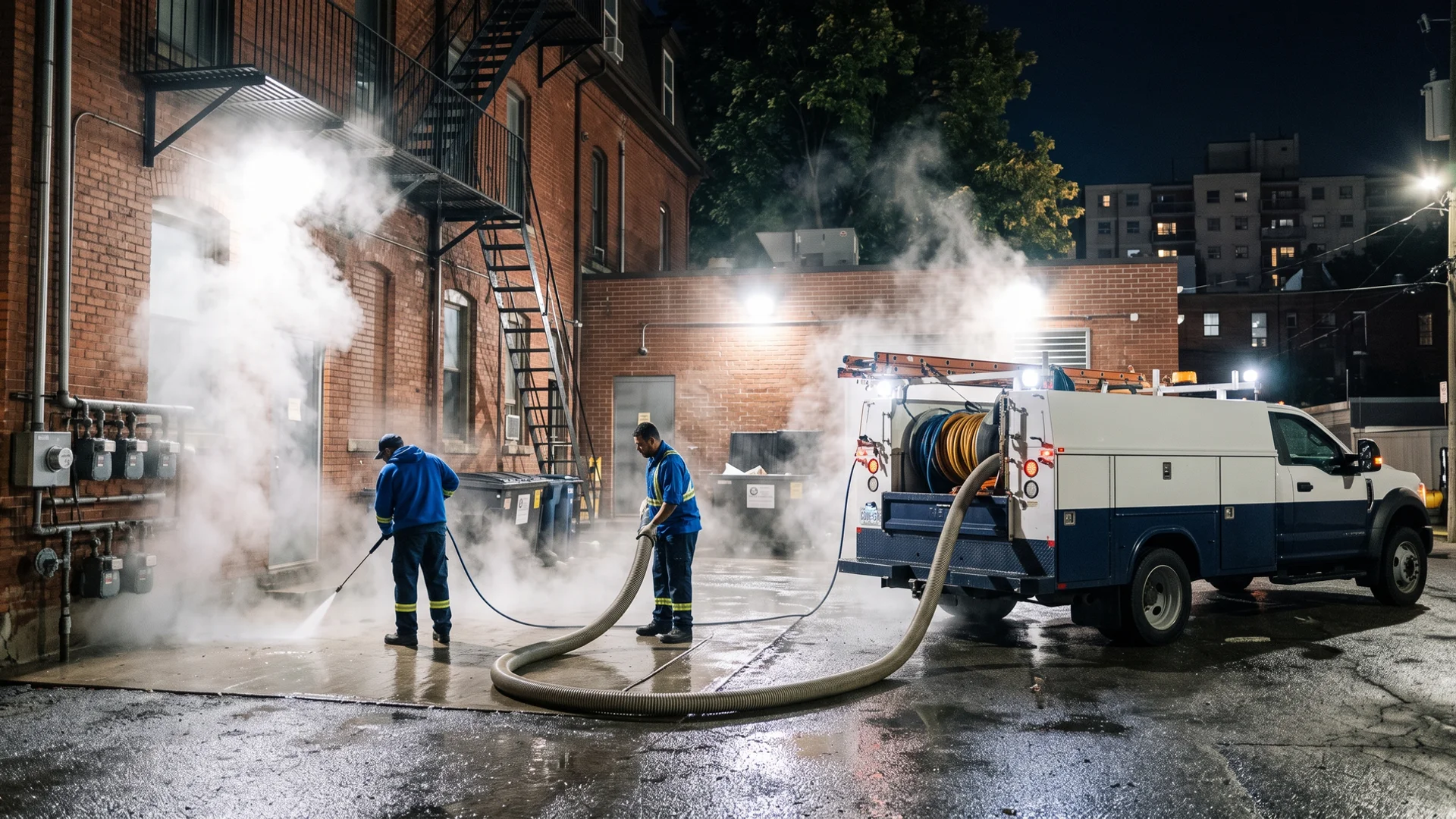
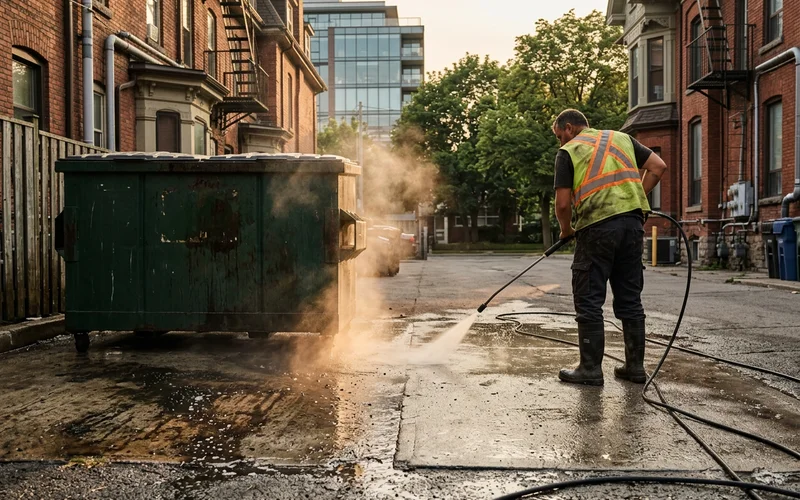
We time visits right after your waste pickup, when bins can be moved or the pad is most open. Drain covers go down first. Degreaser is applied and left to work, then the 200F hot-water rig and a rotary surface cleaner lift grease and leachate from the concrete. The hydrovac recovers the water as we go. Odour neutralizer finishes the job, and you get timestamped photos.
When Should You Book?
- Monthly for restaurant pads, especially from May to September
- Quarterly for plaza, office and residential building pads
- Before a health inspection or landlord walk-through
- When flies, smells or pests appear
How Much Does Dumpster Pad Cleaning Cost?
Pricing
Standalone pads are priced per pad and frequency in writing. Most restaurants bundle the pad into a monthly restaurant power washing plan of $400-$900 per month, which also covers the hood apron, rear door and patio. Recurring schedules lock the rate for 12 months.
Common Dumpster Pad Problems We Solve
Sticky, slippery concrete
Grease carried from the kitchen and leachate from bins leave a film that is slick when wet. Staff carrying bags in the dark are most at risk. Degreasing removes the film rather than just rinsing the top.
Smell that comes back hours after pickup
The odour is not coming from the bin; it is coming from the concrete. Leachate soaks into the pad and keeps fermenting. Enzyme degreaser breaks down the organic residue, and the odour neutralizer finishes the job.
Flies, wasps and rodents
Pests follow food residue. A clean pad, enclosure walls and gate frames remove the attraction, which matters for restaurant inspections and for neighbours sharing a lane.
Stained enclosure walls and gates
Bins bang into block walls and gates and leave grease and food marks. We clean the full enclosure, not just the slab.
Overflowing compactor pads
Compactor pads behind grocery and big-box stores collect liquid that leaks from the compactor. Hot water and degreaser, with hydrovac recovery, are the only clean way to handle it.
Enzyme vs Alkaline Degreasers
We choose the degreaser for the job. Alkaline degreasers cut cooking fats quickly and suit restaurant pads with heavy grease. Enzyme degreasers keep breaking down organic residue after we leave, which helps with lingering odour on food-waste pads. Many monthly plans alternate between the two. Either way, 200F water does the heavy lifting and the hydrovac recovers the runoff.
Wastewater: Why It Matters Behind the Building
Dumpster pads are usually in lanes or rear lots right beside catch basins. Washing leachate and grease into those basins is a common Toronto Municipal Code 681 issue, and it is the owner who usually hears about it. Covering the drain, berming the pad and vacuuming the water with our on-truck hydrovac solves it completely. Your photo report shows the containment in place.
How to Prepare for a Pad Clean
- Book the visit for right after your waste pickup.
- Make sure the enclosure gate is unlocked or the code is shared.
- Tell us about any drains, grease traps or oil-water separators nearby.
Hosing the Pad Yourself vs Professional Degreasing
| Staff with a hose | Our pad service | |
|---|---|---|
| Grease removal | Spreads the film | Emulsified with 200F water and degreaser |
| Odour | Returns within hours | Treated with enzyme degreaser and neutralizer |
| Wastewater | Runs to the lane drain | Recovered by hydrovac |
| Compliance | Risk under Toronto Municipal Code 681 | Contained and documented |
| Staff time | Every week, never finished | Scheduled visit, photos sent |
Rinsing the pad between professional visits is fine for loose debris, but avoid sending grease or leachate into nearby drains.
Dumpster Pad Cleaning Across the GTA
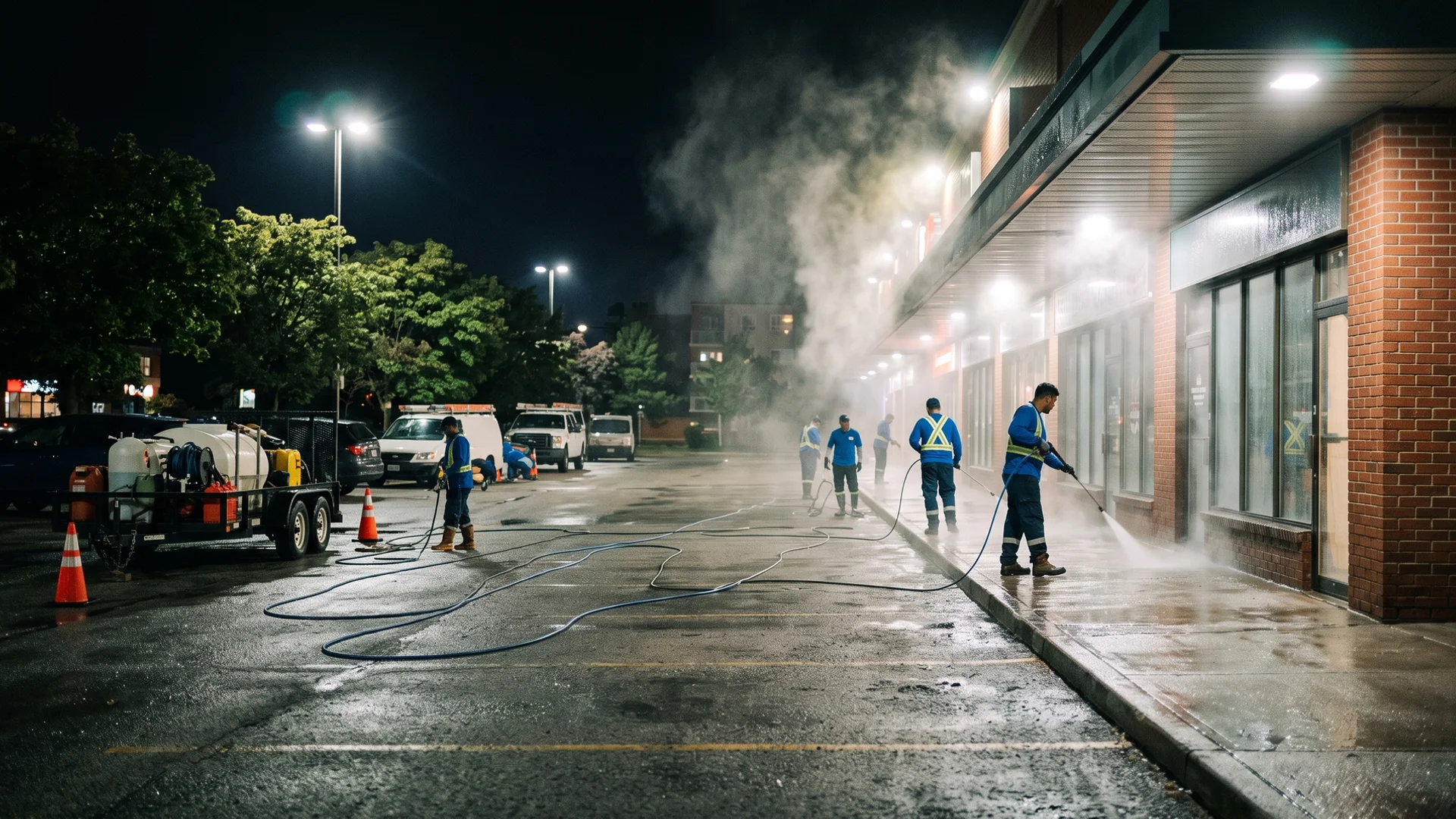
Power Pressure Washing Toronto cleans pads behind restaurants in Trinity Bellwoods, Little Italy and King West in Toronto Central, behind plazas and grocery stores in Mississauga, and across the GTA. Plaza owners usually combine this with shopping plaza power washing, and retailers with storefront and patio cleaning.