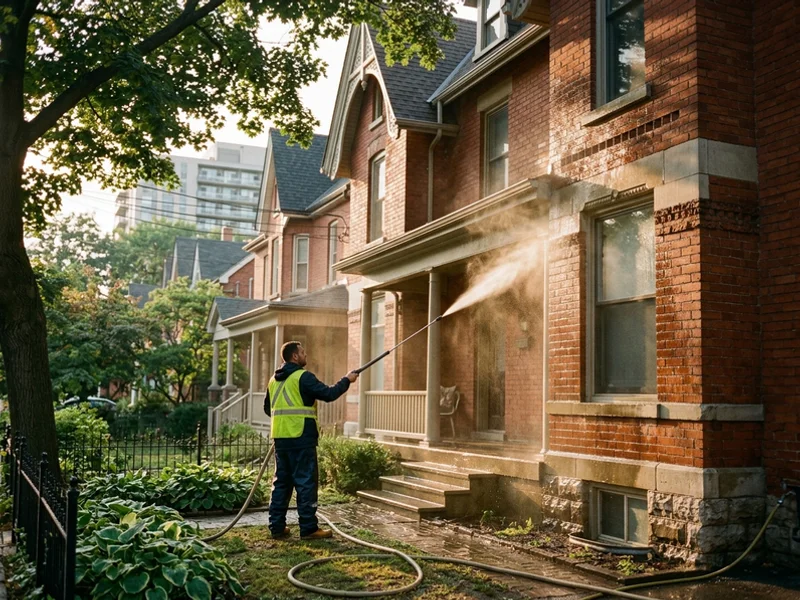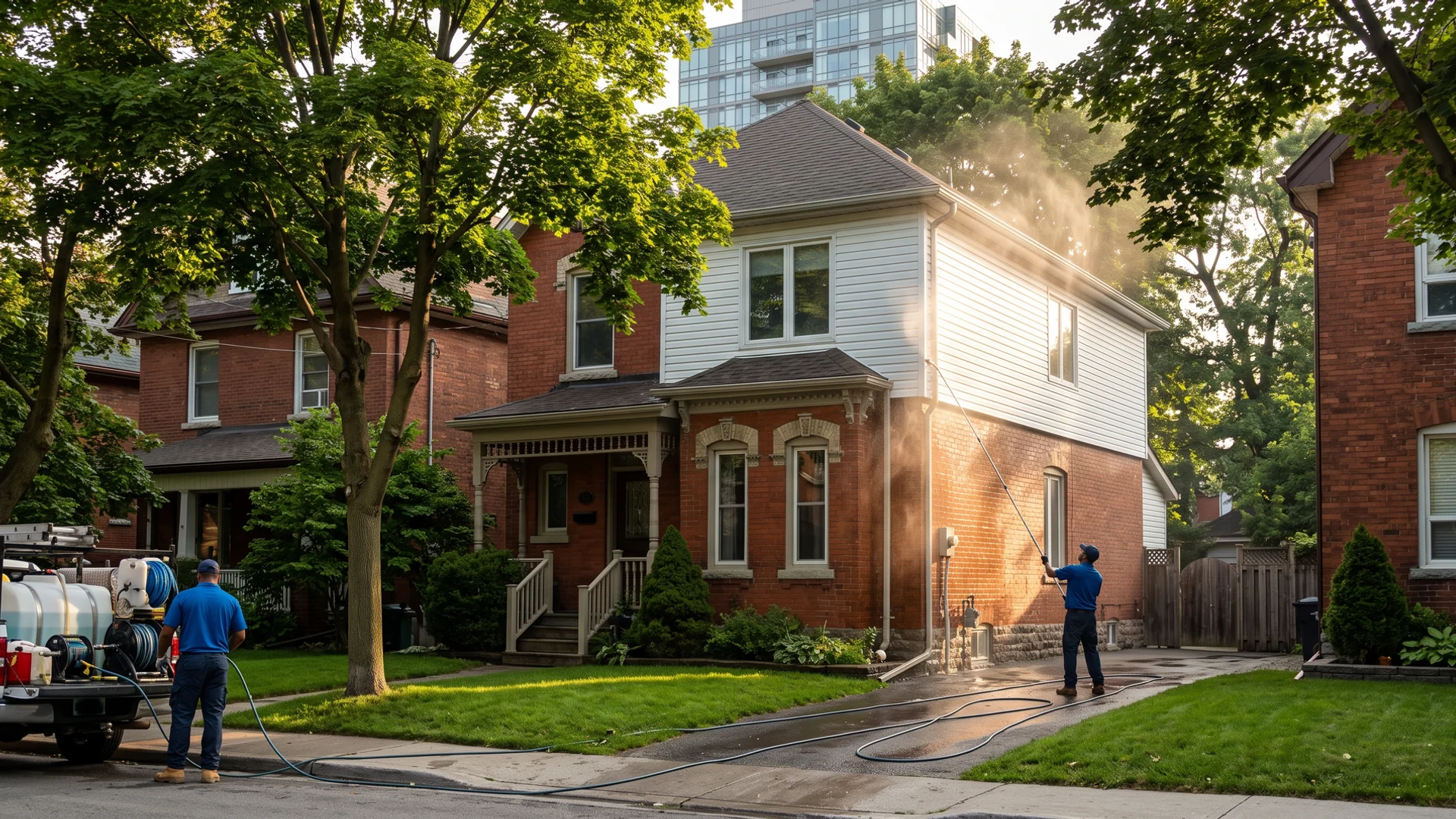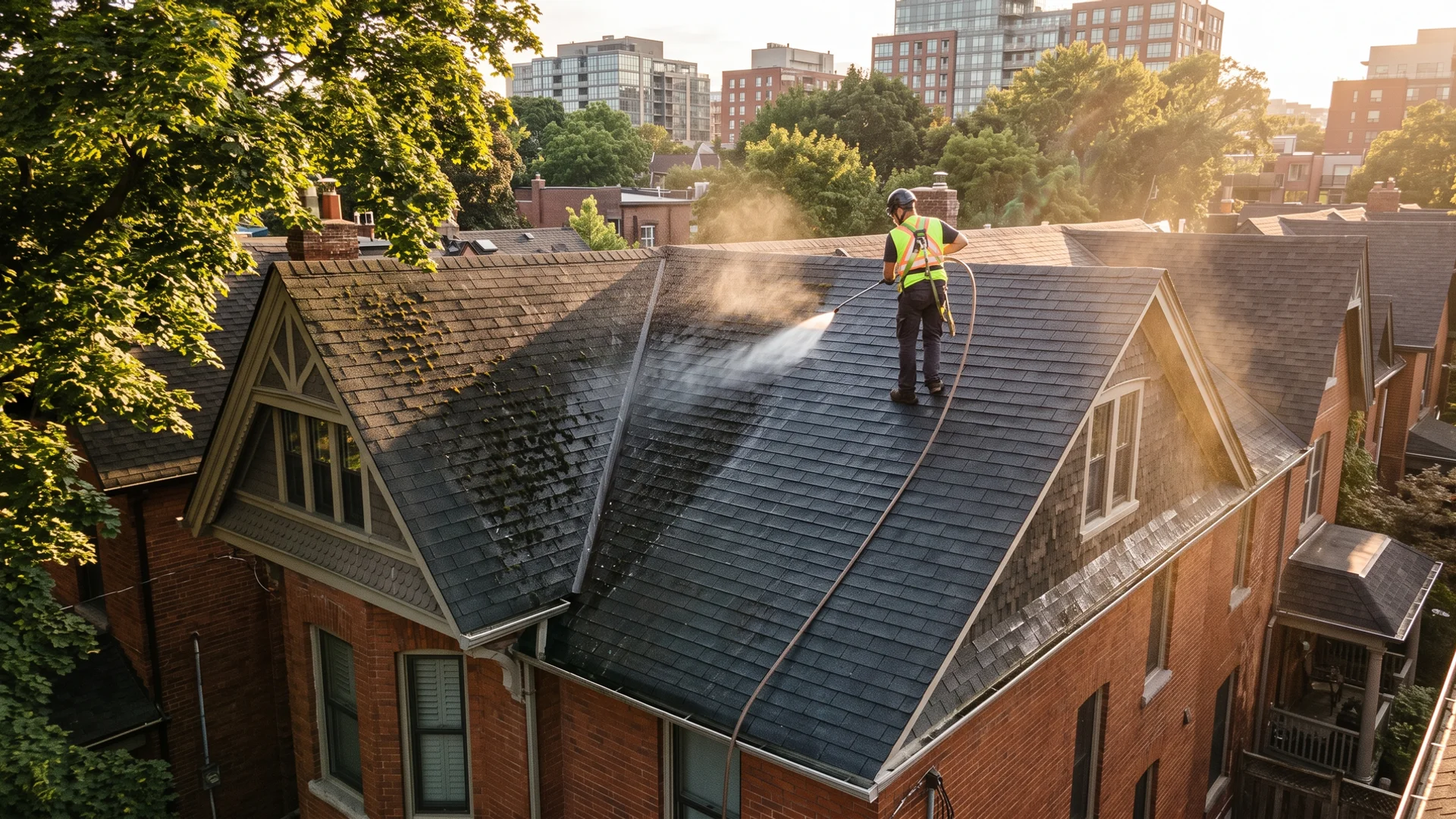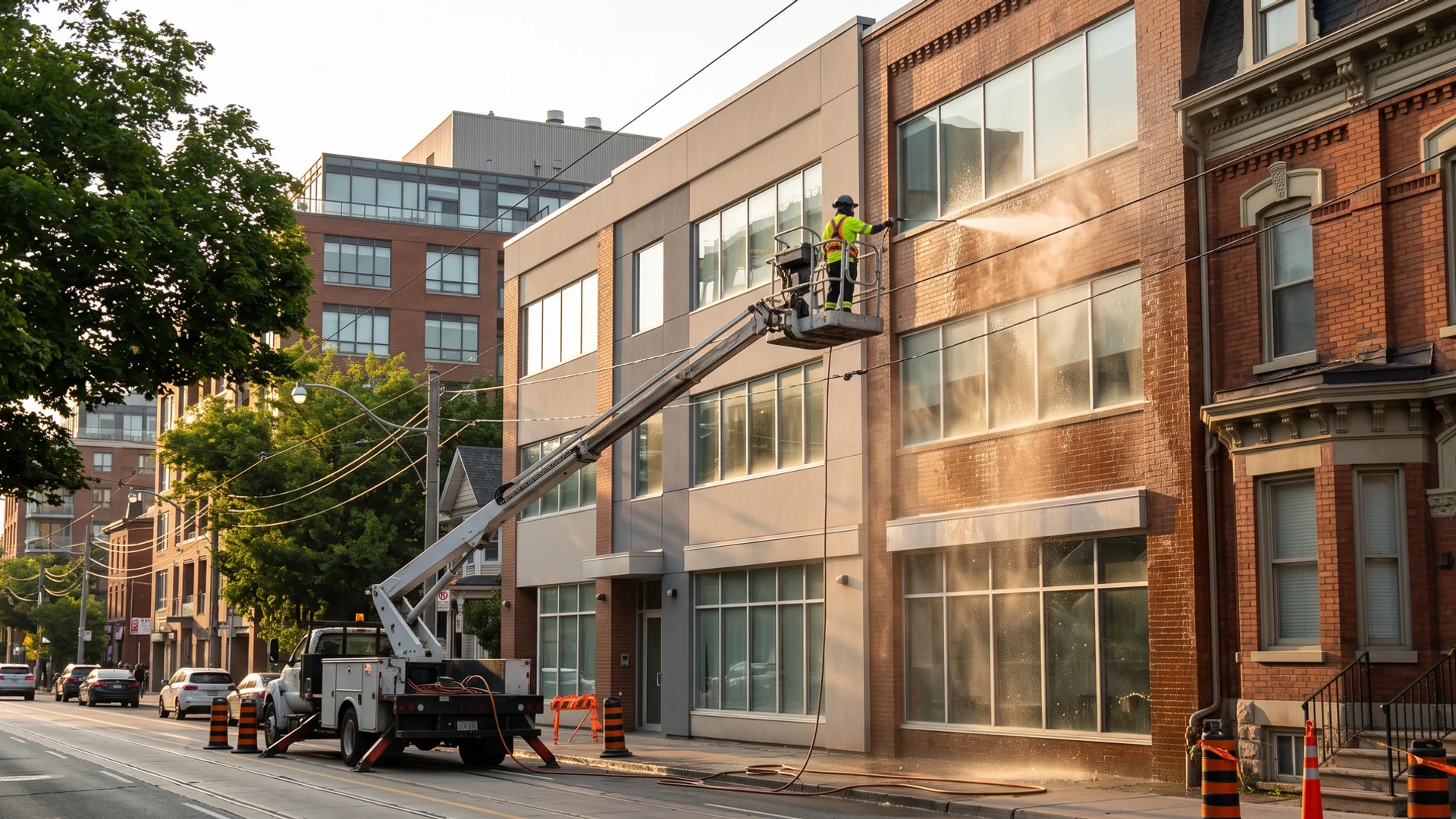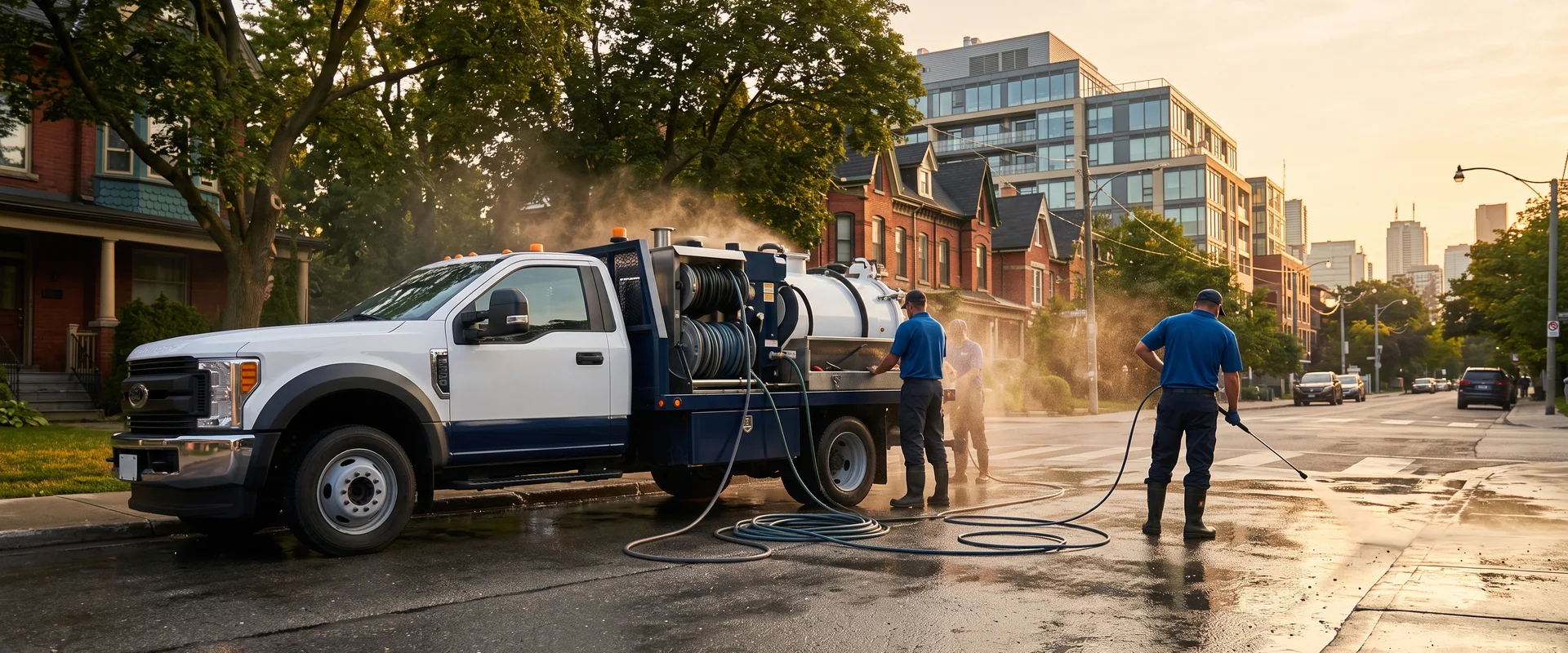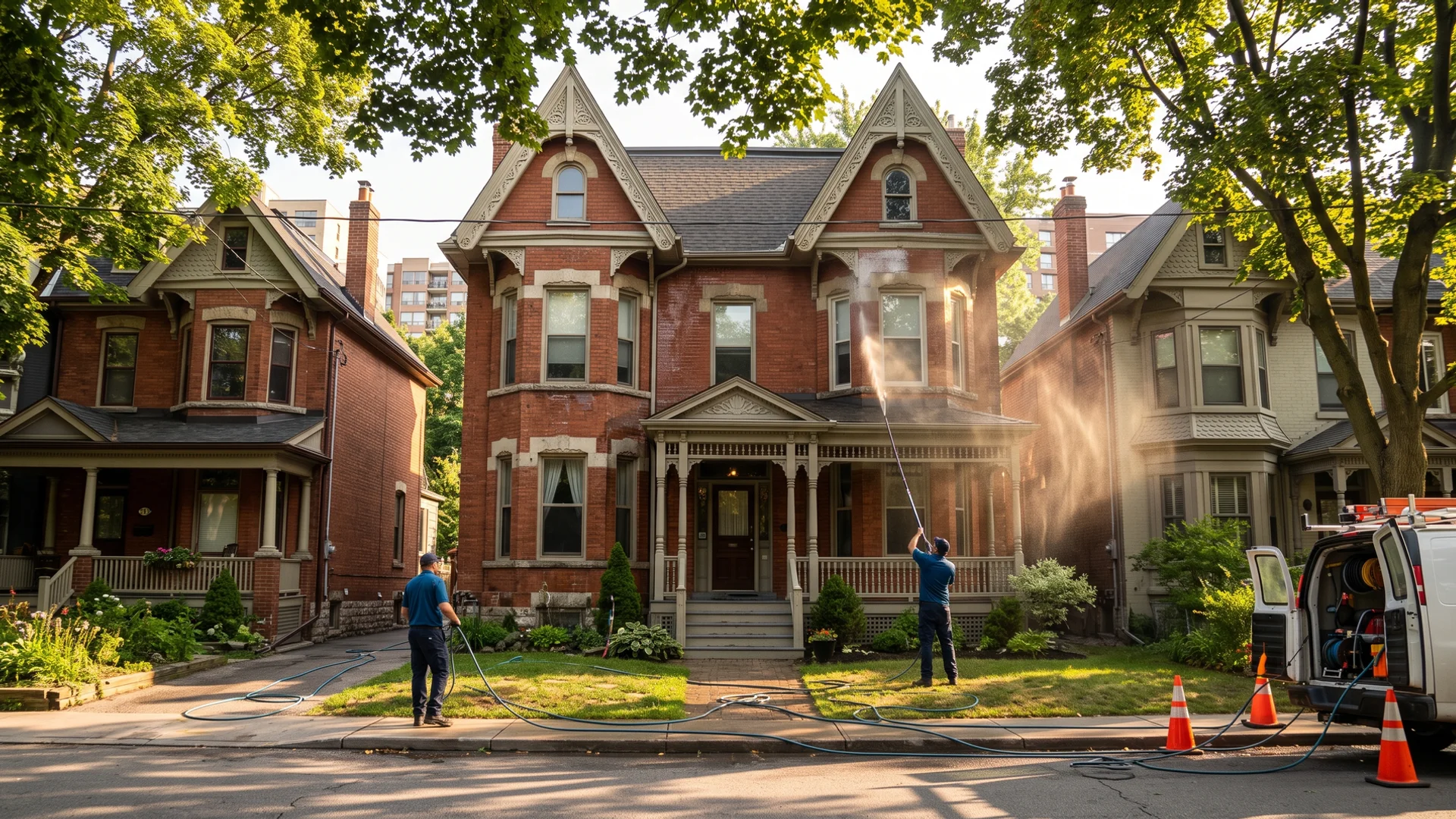
Soft washing in Toronto is how we clean the surfaces that a pressure washer would damage: stucco, EIFS, vinyl, roof shingles and heritage masonry. Our SoftWash low-pressure line applies diluted sodium hypochlorite with a surfactant, lets it dwell, and rinses gently. The algae, mildew and lichen die at the root, and the surface stays intact.
Why Do Some Surfaces Need Soft Washing?
Pressure is a blunt tool. On hard concrete it works. On softer or more delicate materials it causes damage that is expensive to fix:
- Stucco and EIFS gouge and absorb water into the wall.
- Vinyl siding lets water in behind panels.
- Asphalt shingles lose the granules that protect them from UV.
- Heritage brick and lime mortar erode, leaving open joints and pitted faces.
- Limestone and sandstone etch and streak.
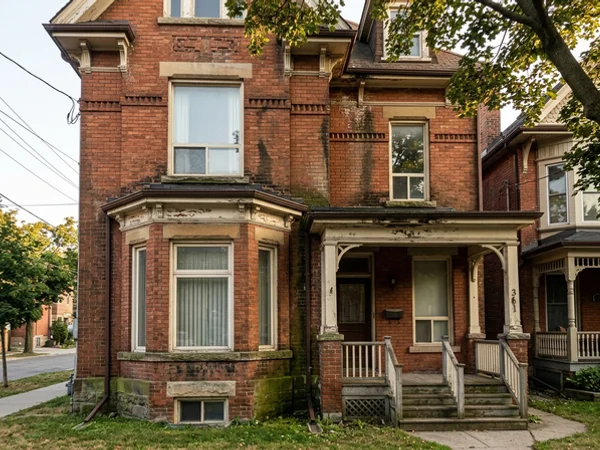
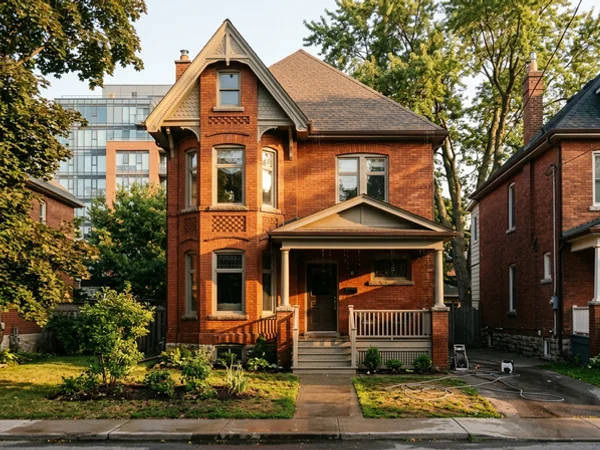
We see the results every season: Victorian brick with blown-out mortar, limestone with zebra streaks from a previous contractor, stucco with wand marks. Soft washing avoids all of it.
How Does Soft Washing Work?
Our SoftWash line uses a proportioner that mixes sodium hypochlorite, water and a biodegradable surfactant at a set ratio for each surface. The surfactant helps the mix cling, so it has time to work. After a short dwell time, the biology is dead and loosened, and a low-pressure rinse carries it away. Pressure stays close to garden-hose levels throughout.
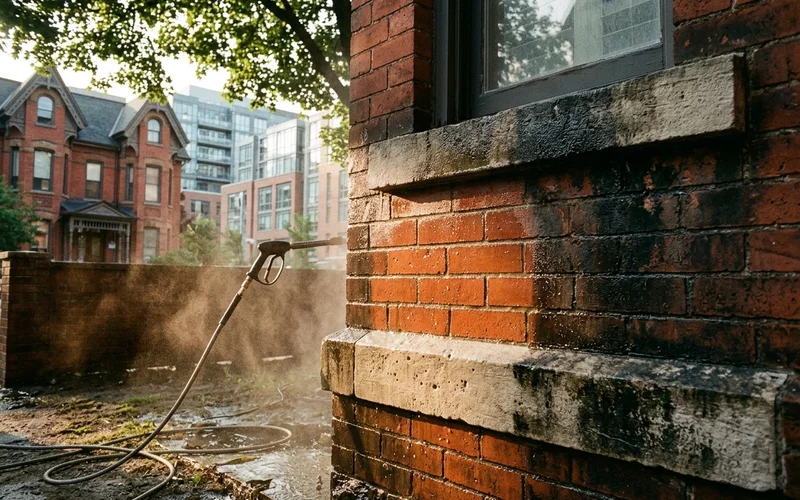
Heritage Masonry Care
Central Toronto is full of heritage homes, many inside heritage conservation districts. We regularly clean:
- Victorian bay-and-gable brick in The Annex, with soft lime mortar
- Limestone sills, lintels and facades in Cabbagetown, including Indiana limestone
- Sandstone on older Rosedale homes
- Cut-stone on Forest Hill estates
Every heritage job starts with a hidden test patch. We document the method so you have a record if a heritage planner asks. One Cabbagetown client’s heritage inspector approved the result on first look.
Surfaces We Soft Wash
| Surface | Typical problem | Soft wash result |
|---|---|---|
| Stucco and EIFS | Green algae, grey staining | Clean finish, no gouging |
| Vinyl and aluminum siding | Algae, mildew, chalking | Bright siding, no water behind panels |
| Asphalt shingles | Black streaks, moss | Even colour, granules intact |
| Heritage brick | Green and black biological growth | Clean brick, mortar untouched |
| Limestone and sandstone | Black staining, lichen | Even tone, no streaks |
When Should You Book a Soft Wash?
- When green, black or grey growth appears on siding, stucco or stone
- When black streaks show on the roof
- Before painting, sealing or repointing masonry
- Before listing a heritage home
How Much Does Soft Washing Cost in Toronto?
Pricing
A full house soft wash runs $350-$550 for a 1,500 sqft home. A roof soft wash runs $450-$850. Heritage masonry and stucco facades are quoted after a test patch, in writing per surface.
Common Problems We Solve With Soft Washing
Zebra streaks from a previous pressure wash
Limestone and soft brick cleaned with high pressure often show light and dark bands where the wand passed. Soft washing evens out the biological staining that makes those bands stand out, and it never adds new ones.
Black staining on north-facing masonry
Most black staining on Toronto brick and stone is biological, not soot. It responds to sodium hypochlorite chemistry and a proper dwell time.
Lichen on stone walls and steps
Lichen grips tightly and grows slowly. It may need a second application or a little more dwell time, and it continues to release over the following weeks.
Algae on stucco and EIFS
Stucco and EIFS stay damp in shade and turn green quickly near the lake. Soft washing with EIFS-safe detergent cleans them without gouging the finish or forcing water behind the system.
Mildew on vinyl and painted wood
Mildew and pollen film come off easily with soft washing, and paint stays intact because there is no pressure on it.
Sodium Hypochlorite, Explained
Sodium hypochlorite is the active ingredient in household bleach. In soft washing it is diluted to a strength suited to each surface, often far weaker on siding than on roofs, and mixed with a surfactant so it clings. It breaks down quickly into salt and water after use. That is why we pre-wet and rinse plants, control overspray and work in calm weather, and why results last: the organisms are killed, not just moved.
What We Never Do on Delicate Surfaces
- Use a 0-degree or turbo tip on brick, stone, stucco or wood
- Pressure wash a shingle roof
- Clean heritage masonry without a test patch
- Leave soft wash solution to dry on glass, metal or plants
Soft Washing vs Pressure Washing on Delicate Surfaces
| Pressure washing | Soft washing | |
|---|---|---|
| How it cleans | Force of water | Chemistry and dwell time |
| Effect on lime mortar | Erodes joints | Leaves joints untouched |
| Effect on limestone | Can etch and streak | Even, gentle clean |
| Effect on shingles | Strips granules | Keeps granules in place |
| How long results last | Growth returns quickly | Growth killed at the root, lasts longer |
The difference is not just about avoiding damage. Because soft washing kills algae, mildew and lichen rather than knocking them off, most surfaces stay clean one to three years longer than after a pressure wash.
Soft Washing Across the GTA
Power Pressure Washing Toronto soft washes heritage homes in The Annex, Cabbagetown, Rosedale and Forest Hill in Toronto Central, lakefront stucco and stone in Old Oakville and Bronte in Oakville, and homes across the GTA. For full exteriors see house washing, for roofs see roof cleaning, and for commercial facades see exterior building washing.